
Reliable Plumber in Dublin, CA
Expert Plumbing and Water Heater Service for Dublin's Growing Community
Over more than 20 years of serving Dublin homeowners, Barnett Plumbing & Water Heaters has resolved problems such as recurring tankless water heater errors, kitchen drain backups affecting neighboring units, and slab leaks that cause unexpected increases in water bills. These are the types of plumbing problems our team handles for Dublin homeowners every week.
Our nearest office is in Pleasanton at 4713 First Street, Suite 242, about 10 minutes south of most Dublin neighborhoods. Call (925) 294-0171 to request service from a Barnett plumber.
Full-Service Residential Plumbing for Dublin Homes
Dublin’s population nearly doubled between 2000 and 2020. That kind of growth means most of the city’s housing stock is less than 25 years old. New construction sounds like good news for plumbing, but builder-grade systems installed during a housing boom carry their own set of problems. Mass-produced water heaters, budget fixture connections, and lowest-bid installation shortcuts start failing right around the time warranties expire.
At the other end of the spectrum, homes along Village Parkway and the older Dublin neighborhoods near the original town center date back to the 1960s and 1970s. Those properties run on galvanized steel, cast iron, and copper systems that have long passed their expected service life.
Every job follows California Plumbing Code (CPC) standards. We pull all required permits through the City of Dublin Building Division, coordinate inspections, and guarantee our work.
Water Heater Services
Plumbing Services
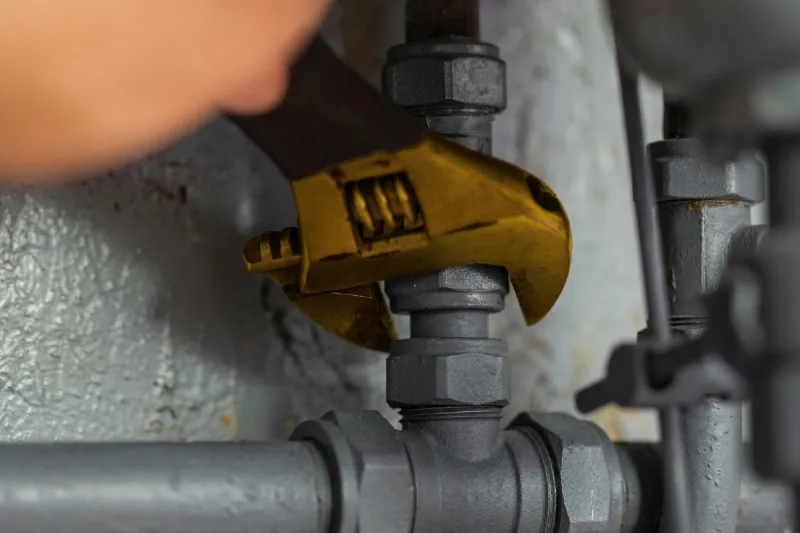
From whole-house repiping to trenchless main line solutions, we deliver durable copper and PEX systems installed by a skilled plumbing team. To ensure minimal disruption to your daily routine, our team manages the entire process, from obtaining initial permits and securing strategic wall access to expert drywall patching and final water pressure testing. We offer transparent, fixed-rate pricing and exceptional craftsmanship, fully licensed for your peace of mind (California License #910529, C-36 Plumbing).
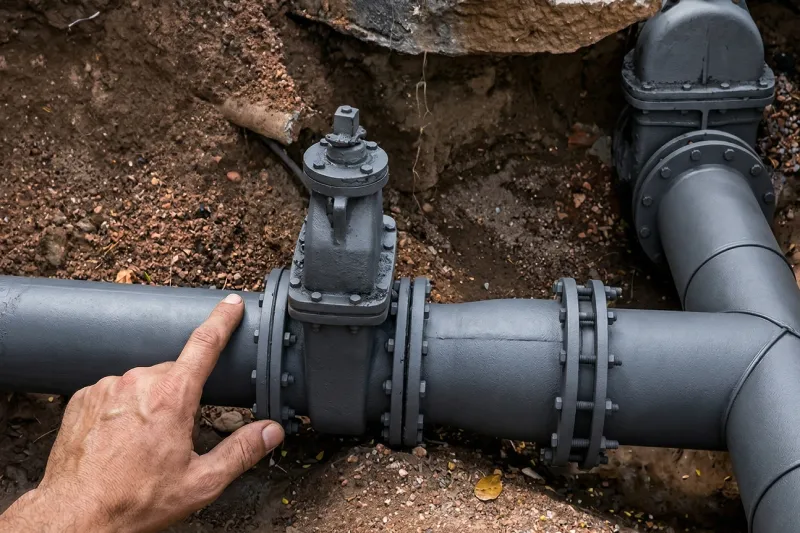
Our experienced plumbers assess the pipe condition, location, and access to determine whether trenchless sewer repair or traditional open-trench work is the appropriate solution for restoring proper wastewater flow. Using advanced video camera inspections and heavy-duty hydro-jetting, we target root intrusions, structural cracks, and severe blockages to restore your entire sewer lateral to peak performance.
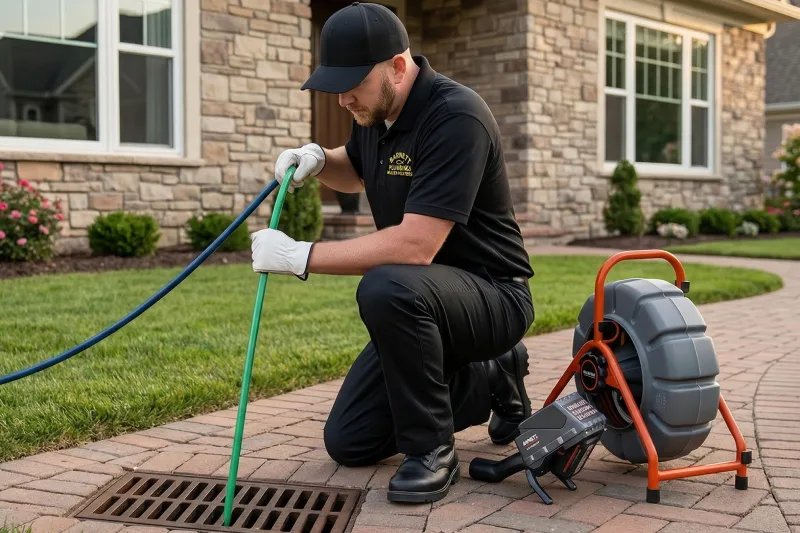
At Barnett Plumbing, our specialized plumbers use advanced sewer video camera inspections and locating equipment to accurately identify obstructions, assess drain conditions, and restore proper wastewater flow. Using high-pressure hydro-jetting, targeted root cutting, and comprehensive main line clearing, we clear deep-seated clogs and help prevent recurring backups in residential and commercial drainage systems.
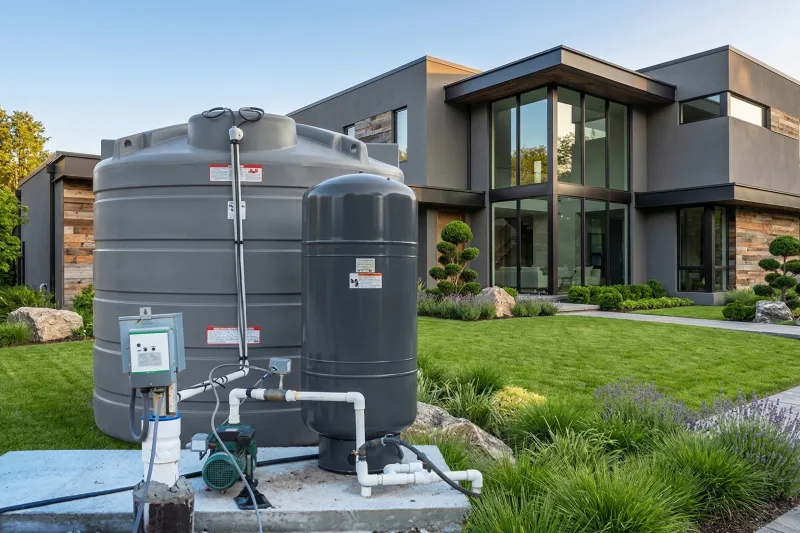
Barnett Plumbing installs whole-house water filtration systems and water conditioners that treat water at the point of entry, helping reduce chlorine, sediment, minerals, and other water quality concerns before treated water reaches your faucets, showers, and appliances. To ensure pristine water and extended equipment lifespan, our service includes custom system sizing, professional valve configuration, and precise water hardness testing.
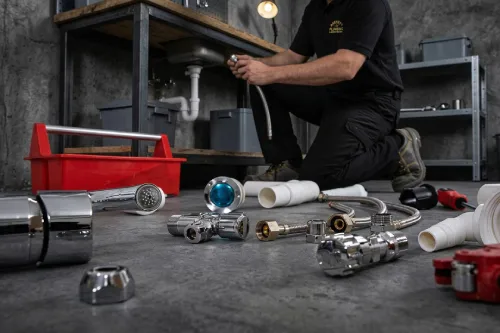
We handle kitchen plumbing problems such as dripping faucets, slow-draining sinks, leaking connections, faulty garbage disposals, and dishwasher hookups. Barnett Plumbing repairs and replaces kitchen fixtures, clears drain problems, and installs plumbing connections to keep sinks and appliances working properly.
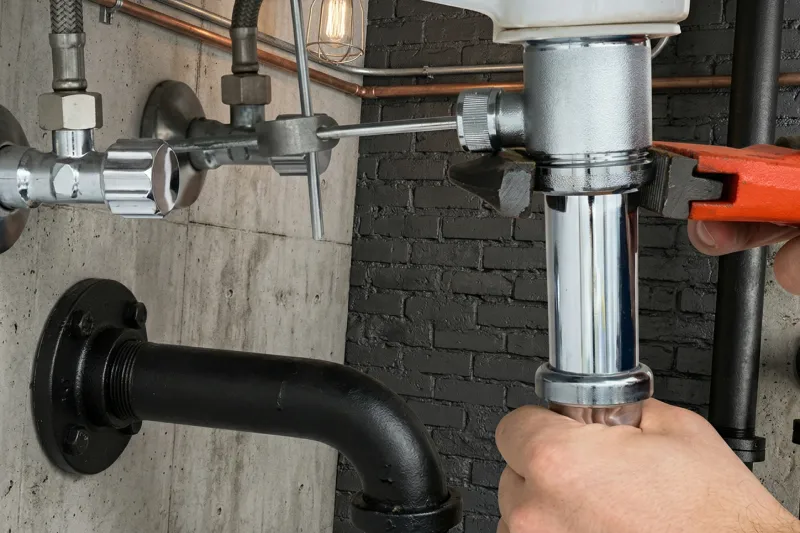
Barnett Plumbing identifies the cause and repairs or replaces showers, tubs, faucets, toilets, drains, valves, and related fixtures. Our plumbers also check connections and water flow to address related issues that could lead to recurring leaks or drainage problems. Whether you are upgrading outdated fixtures or resolving complex plumbing failures, our team ensures every component operates safely and efficiently for years to come.
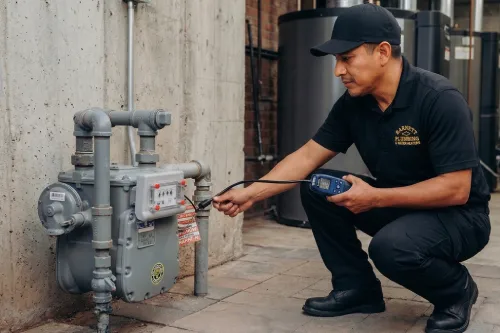
Our in-house plumbers use electronic and acoustic leak detection to locate hidden leaks inside walls, beneath concrete slabs, and along underground water lines, helping pinpoint the source while limiting unnecessary property damage. To protect against structural damage and mold, our full-service approach combines thermal imaging diagnostics, precision line-pressure testing, and expert plumbing repairs for both minor pinhole leaks and complex slab-line failures.
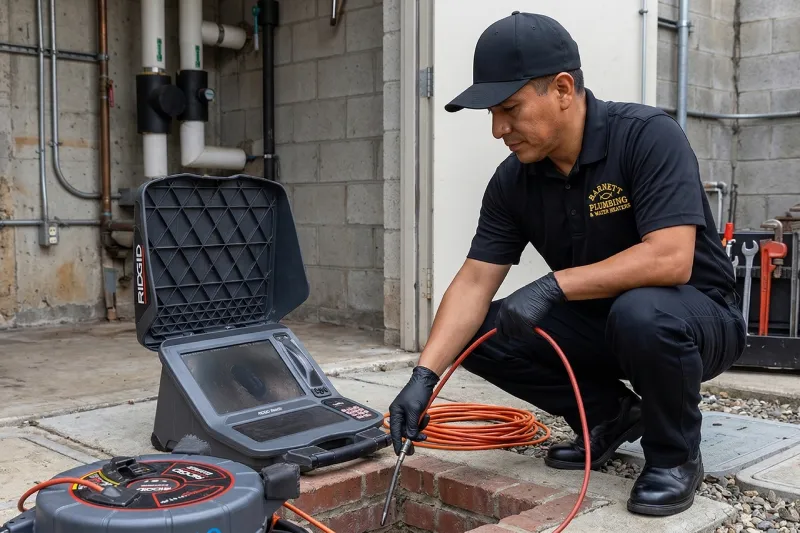
We use sewer cameras to inspect drain and sewer lines from the inside, allowing our in-house plumbers to locate blockages, root intrusion, cracks, and damaged pipe sections without unnecessary digging. Empowering homeowners with complete transparency, our advanced inspection service provides high-definition digital footage, exact above-ground depth mapping, and digital copies of the recording so you can view the pipe’s condition firsthand before any work begins.
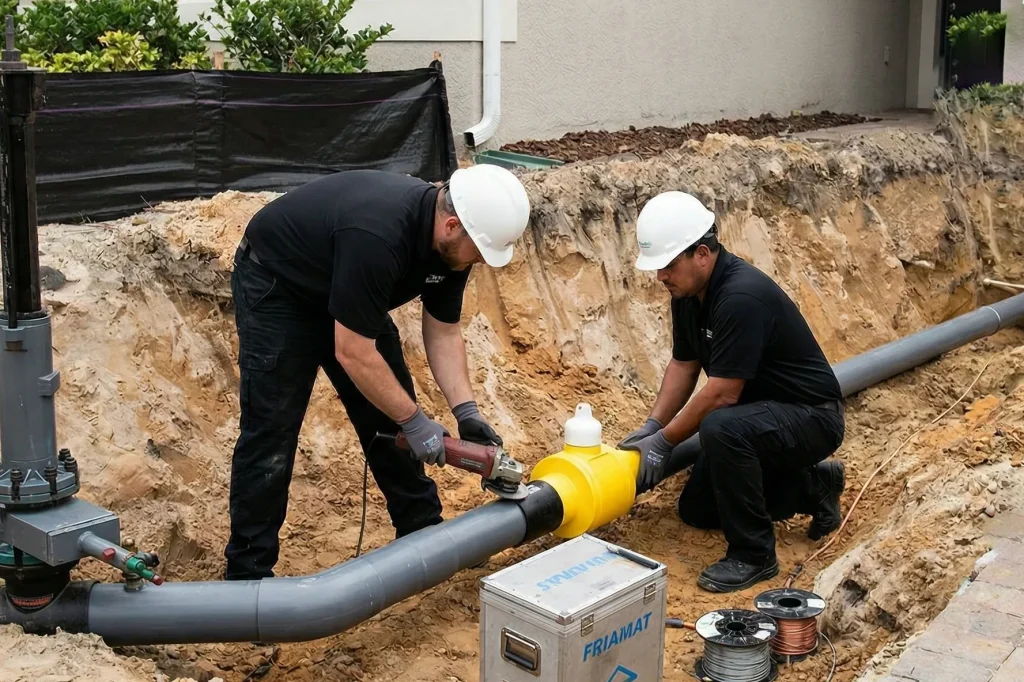
Barnett Plumbing provides residential gas line services for repairs, replacements, and new appliance connections, helping address leaks, damaged piping, and gas supply requirements safely and correctly. Prioritizing your family’s safety above all else, our comprehensive gas line solutions include complete safety inspections, expert seismic valve installations, and meticulous, code-compliant pressure testing to ensure every connection is secure.
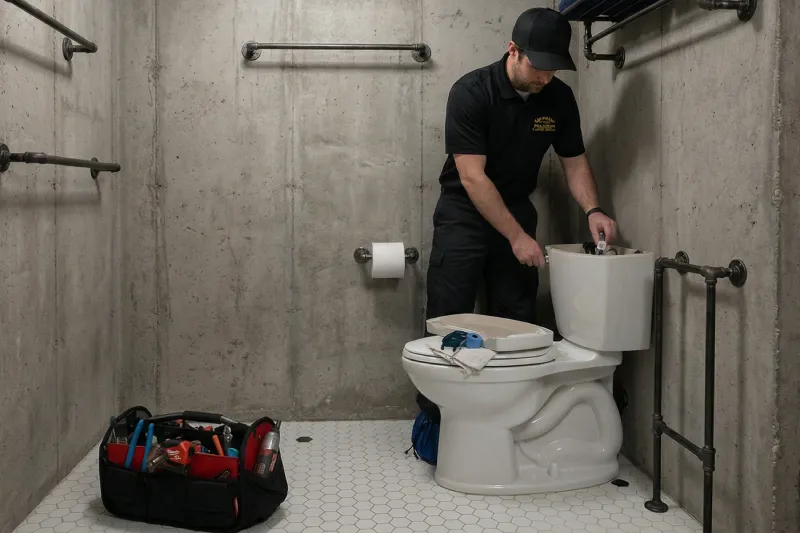
From constantly running toilets and weak flushing to clogs, leaks, and faulty internal components, our plumbers diagnose toilet problems and repair or replace the affected parts to restore proper operation. Our in-house plumbers elevate bathroom reliability and hygiene through complete wax ring replacements, tank-to-bowl seal overhauls, and professional adjustments to flush valves and flappers for lasting, leak-free performance.
Tell Us What's Going On. We'll Handle It.
How Dublin's Geography and Growth Affect Your Plumbing
Clay Soils and Ground Movement
Seismic Considerations
Flood Risk Near Creek Systems
DSRSD Water: What Makes Dublin Different
Thermal Expansion and Temperature Stress
Dublin experiences a notable seasonal temperature range, with average winter lows around 37-40°F and average summer highs reaching about 87-89°F. Day-to-night temperature differences can also reach roughly 20 to 24°F. These temperature changes cause outdoor and exposed pipes to repeatedly expand and contract, placing stress on joints, fittings, seals, and connection points. Over time, repeated thermal expansion and contraction can weaken vulnerable connections and contribute to leaks, particularly in older or poorly supported plumbing.
Hard Water and Mineral Buildup
Dublin-area water can measure around 16 to 18 grains per gallon of hardness, meaning it contains elevated levels of dissolved calcium and magnesium. As hard water moves through a home, these minerals can form scale inside faucets, showerheads, water heaters, and plumbing lines. Over time, mineral buildup can restrict water flow, leave white deposits on fixtures and glass, reduce water heater efficiency, and increase maintenance needs for water-using appliances.
Neighborhood-Specific Plumbing Challenges Across Dublin
Dublin Ranch & Positano
1999-2015 / Mediterranean Revival / Builder-Grade Aging Out / Clay Soil Movement
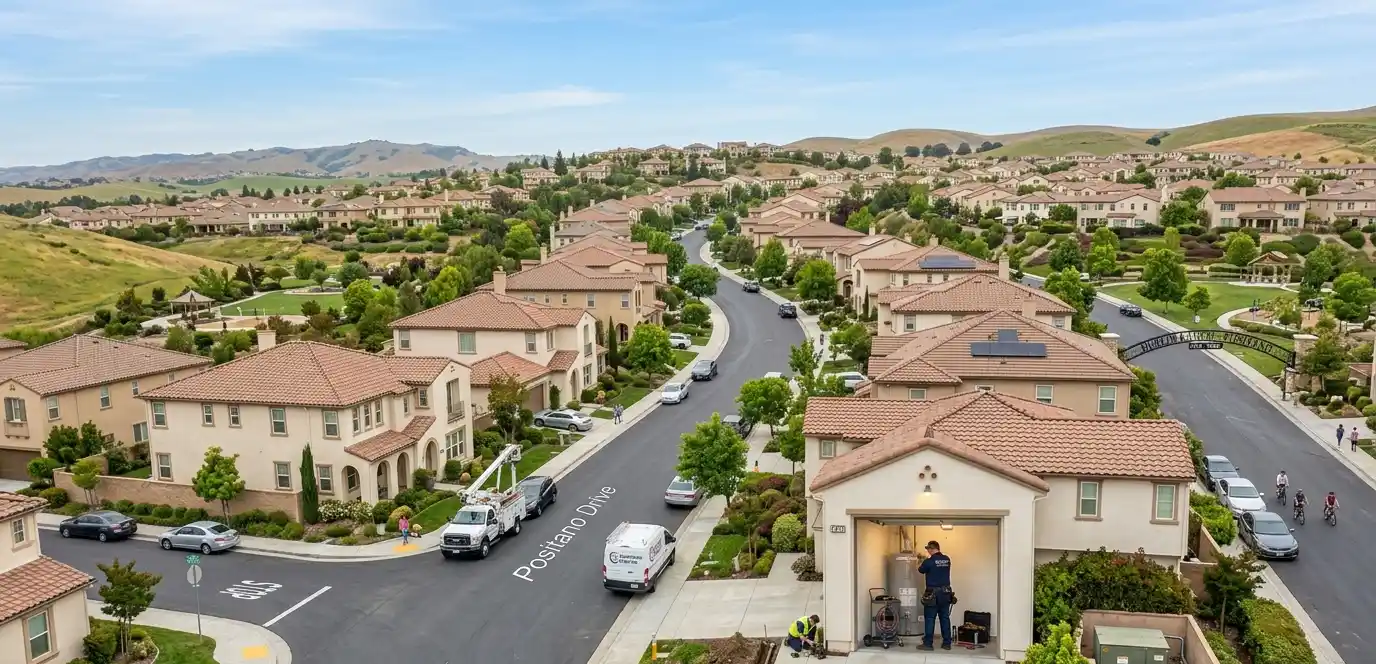
The largest residential development in Dublin. Homes here were built during a 15-year stretch of rapid construction. Builder-grade water heaters installed with the original build are now 10 to 25 years old, well past the 8 to 12-year typical lifespan. Garbage disposals, supply valve connections, and fixture shutoffs from the original install are failing in clusters across the neighborhood. The clay soils under Dublin Ranch have high shrink-swell potential, which stresses sewer line joints and can cause foundation-level pipe connections to shift over time.
Wallis Ranch
2008+ / Gated / Modern Construction / HOA Shared-Wall Complexity
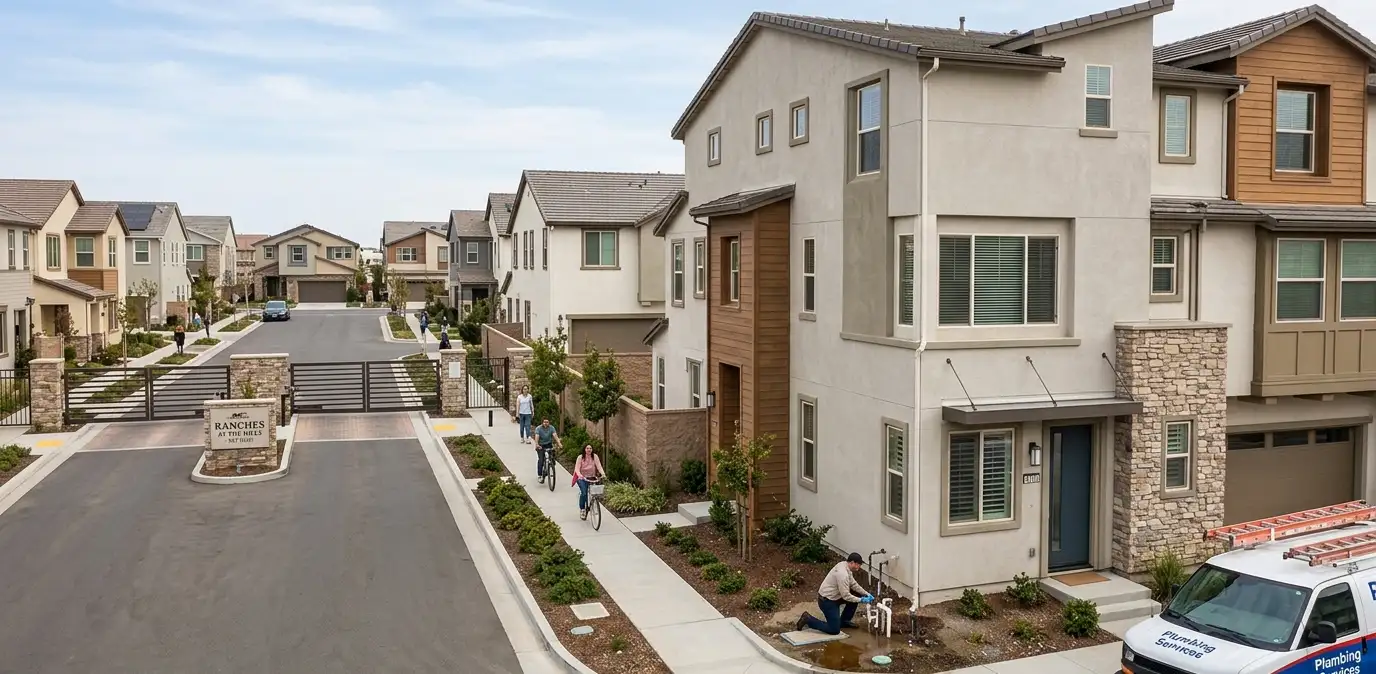
A gated community with a mix of single-family homes and attached townhomes. The townhome and condo units share walls, which means shared plumbing risers, common drain stacks, and supply lines that serve multiple units. A leak or blockage in one unit can affect the neighbor. CC&Rs often create ambiguity about who is responsible for repairs in common walls. We work with HOA boards and individual owners to diagnose shared-wall plumbing issues and determine the repair path.
Schaefer Ranch
2008-2012 / Discovery Homes & Toll Brothers / Hillside Views / PEX Systems
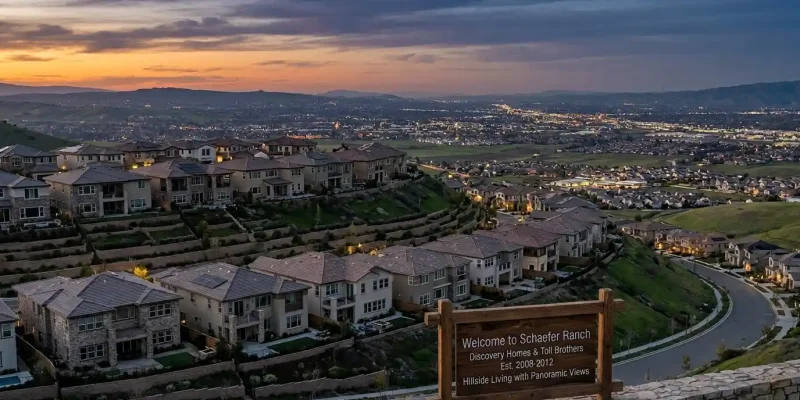
Built into the western hills with panoramic views of the valley. These homes use modern PEX supply systems, which is good news for longevity. The concern here is the builder-grade fittings connecting that PEX to fixtures and appliances. Push-fit connectors and SharkBite-style fittings used during mass production develop leaks faster than crimped or expansion fittings. The hillside elevation also places Schaefer Ranch in a higher DSRSD pressure zone, which adds stress to every connection point.
Fallon Village & Emerald Glen
2000s+ / Newer Builds / DSRSD Pressure Zones / Sports Park Proximity
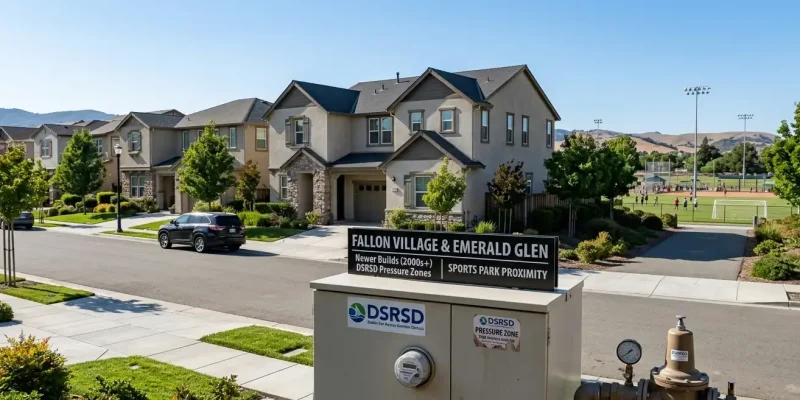
Newer residential areas near the city’s sports parks and community facilities. Homes here are in the 15 to 25-year range, which puts original water heaters and garbage disposals right at their expected failure point. Fallon Village sits in a DSRSD pressure zone that can deliver higher-than-expected incoming pressure. Without a functioning pressure-reducing valve, that excess pressure wears out fill valves, washing machine hoses, dishwasher connections, and supply line fittings from the inside.
Dublin Crossing
2018+ / Former Camp Parks / Newest Development / Warranty Window Closing
Built on the former Camp Parks military reserve land, Dublin Crossing is the newest major development in the city. Homes here are still within or just exiting their builder warranty window. The most common issues we see in developments this new are installation defects that were not caught during the building inspection: improperly supported drain lines, missing pipe hangers, loose fixture connections, and water heater installations that do not meet current code for seismic strapping or expansion tanks.
Older Dublin / Village Parkway
1960s-1980s / Oldest Housing Stock / Galvanized & Cast Iron / Full Repipe Candidates
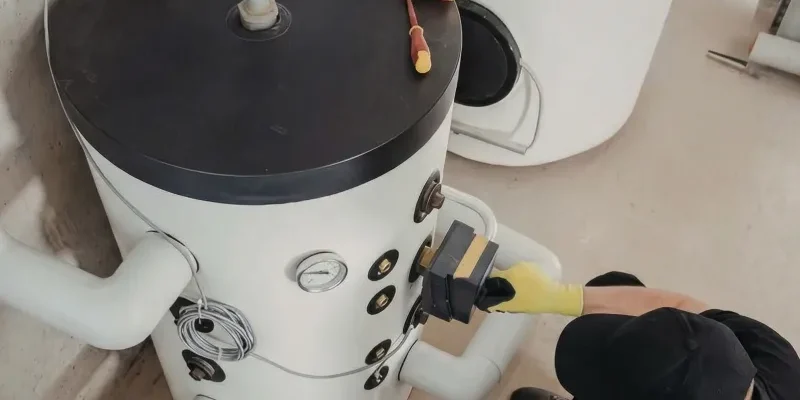
The original Dublin, clustered around Village Parkway and the historic town center. These homes are 40 to 60+ years old. Galvanized steel supply lines have long exceeded their service life, restricting flow and pushing rust into the tap water. Cast iron sewer lines are cracking at joints and developing belly sags from decades of ground movement. Many of these properties are strong candidates for whole-house repiping and sewer line replacement. We walk homeowners through phased upgrade plans that spread the investment over time.
Pipe Material Lifespan Timeline
Galvanized Steel: 30-50 years. Expired for any home built before 1980.
Polybutylene: 10-15 years before failure risk. Installed 1975-1996. Becomes brittle from chlorinated water. Fails suddenly.
Copper: 50-70 years. Approaching end of life for 1960s and 1970s homes.
Cast Iron: 50-75 years. Expired for pre-1970s sewer lines.
PEX: 40-50+ years. Newer material, but vulnerable to rodent damage and UV exposure.
Builder-Grade Fittings (push-fit, SharkBite): 10-25 years depending on water pressure and installation quality. Often the first point of failure in newer Dublin homes.
Not Sure What's Wrong? Describe It. We'll Figure It Out.
Builder-Grade Systems: What Fails First in Dublin's Newer Homes
Water Heaters: The 8 to 12-Year Clock
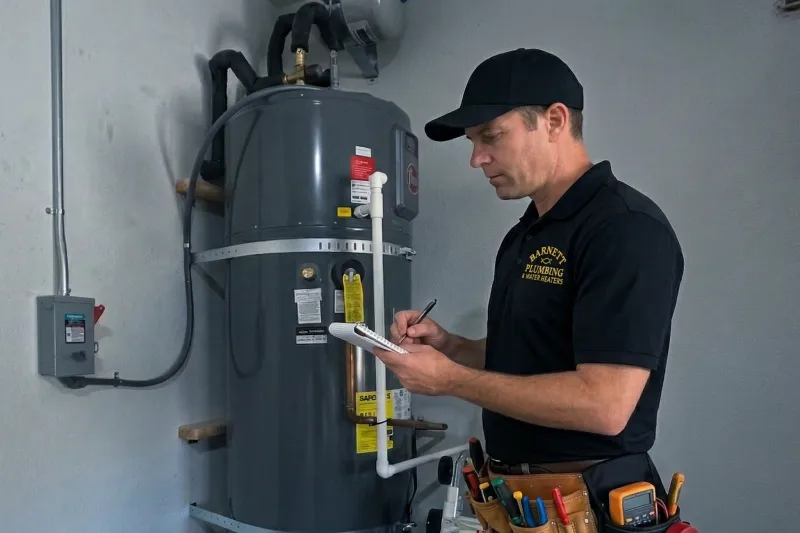
A standard builder-grade tank water heater lasts 8 to 12 years with normal use. Dublin Ranch homes built in 2005 are now past the 20-year mark. Even homes built in 2012 are approaching or past the replacement window. Signs of a failing water heater include rusty water from the hot side only, rumbling or popping sounds during heating cycles, water pooling at the base, and gradually decreasing hot water volume. A tank that fails suddenly can dump 40 to 50 gallons onto your garage floor in minutes.
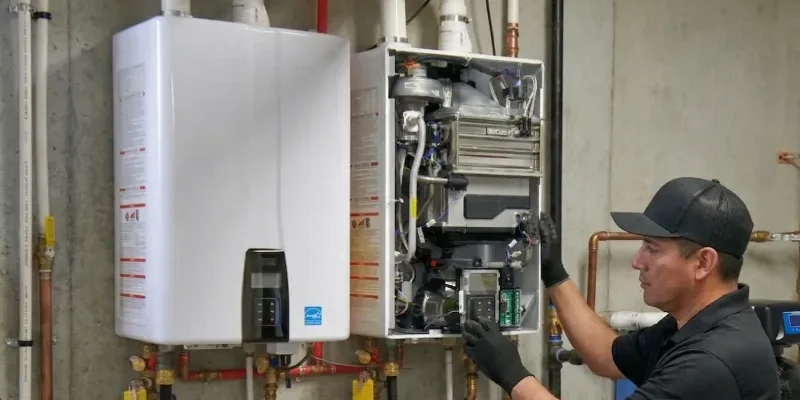
We install American Standard, Rheem, and tankless units. Every water heater installation includes seismic strapping, expansion tank, proper venting, and a permit through the City of Dublin.
Garbage Disposals and Fixture Connections
PEX Fitting Failures
Galvanized Vent Stacks in 1999-2008 Builds
Shared-Wall Plumbing in Dublin's Townhomes and Condos
The HOA Responsibility Split
Common Wall Pipe Failures
Water Hammer and Pressure Regulator Failures
Describe Your Problem. We'll Call You Back Today.
Dublin Plumbing Permits, Codes, and What You Need to Know
The City of Dublin Building Division requires permits for any plumbing work that involves replacing concealed pipes, including drain lines, water supply lines, soil pipes, waste lines, and vent pipes. That covers water heater replacement, whole-house repiping, sewer line replacement, new gas line installation, and any connection to the DSRSD water main or city sewer system.
Minor repairs like fixing a leaking faucet, clearing a drain stoppage, or replacing a toilet flapper do not require a permit. But anything that changes the layout or replaces a section of concealed piping does.
We handle every step. When you hire Barnett Plumbing, your permits are filed with the City of Dublin, your inspections are scheduled, and your completed work is documented and code-compliant. You don’t touch a single form.
Why Dublin Homeowners Choose Barnett Plumbing & Water Heaters
Over 900 families across the Tri-Valley have left us five-star reviews. We’ve held CA Contractor License #910529 (C-36 Plumbing) since 2005. We carry full general liability coverage, workers’ compensation through Benchmark Insurance Company, and a $15,000 bond through American Contractors Indemnity Company.
Our closest office to Dublin is at 4713 First Street, Suite 242, Pleasanton, CA 94566, about 10 minutes south of most Dublin neighborhoods. We stock American Standard, Rheem, and Bradford White equipment on our trucks through Tri-Valley distributors, so parts and warranty support stay local.
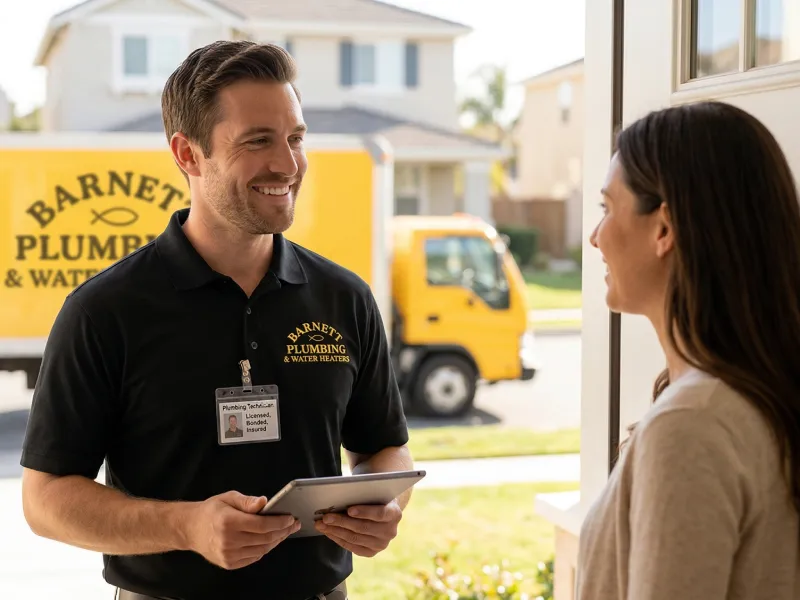
Every technician arrives prepared to diagnose your issue and present your options clearly. That includes honest assessments of when a repair makes sense versus when replacement costs less over time.
Call (925) 294-0171 to schedule service.
Frequently Asked Questions
Is Dublin's water from DSRSD or EBMUD?
My Dublin home is only 10 years old. Do I really need plumbing service?
Who is responsible for plumbing in a shared wall between townhome units?
Does the City of Dublin require a permit for water heater replacement?
Yes. Water heater replacement requires a permit and a post-installation inspection from the City of Dublin Building Division. We handle the entire permitting process. You do not need to visit the permit center or fill out any paperwork.