The Barnett Plumbing team

Expert Plumbing Services in Pleasanton, CA

Trusted Local Plumbers Backed by 900+ Five-Star Reviews

Barnett Plumbing & Water Heaters has served Pleasanton, CA homeowners for over 20 years—handling everything from emergency leak repairs and whole-house repiping to hot water system installations, sewer line replacements, and water treatment solutions. We are locally based at 4713 First Street, Suite 242, Pleasanton, CA 94566, licensed by the State of California (License #910529), fully insured, and bonded. When your home's plumbing needs professional attention, call (925) 399-8782.

Google Reviews - Excellent, 911 reviews BBB A+ Rating Energy Skilled - U.S. Department of Energy

Get Your Free Estimate

Fast response · No obligation

"*" indicates required fields

This field is for validation purposes and should be left unchanged.

Contact Us Today

The Barnett Plumbing team in front of their fleet of yellow service trucks
20+
Years Experience
900+
Five-Star Reviews
100%
Licensed, Insured & Bonded

Full-Service Residential Plumbing for Pleasanton Homes

Pleasanton properties—from 1960s ranch homes downtown to newer construction in Ruby Hill—need a plumbing contractor equipped to handle the full scope of residential systems.

Barnett Plumbing provides comprehensive service across every major plumbing category:

🔥

Water Heater Installation & Replacement

Traditional tank units, on-demand (tankless) water heaters, and hybrid electric heat pump systems from brands including Rheem, AeroTherm, and American Standard

🔧

Whole-House Repiping

Complete pipe replacement for aging galvanized, polybutylene, or corroded copper systems

🏗️

Sewer Line Replacement & Repair

Including trenchless options for underground waste lines damaged by roots, soil movement, or material failure

💧

Water Filtration & Purification

Whole-house water treatment systems to address hardness, sediment, and contaminants in Tri-Valley municipal supply

🚿

Drain Clearing & Sewer Cleaning

Hydro-jetting and mechanical rootering for stubborn blockages

🔍

Leak Detection & Repair

Electronic and acoustic methods for locating hidden leaks in walls, slabs, and underground lines

🚽

Fixture Installation & Repair

Faucets, toilets, garbage disposals, hose bibs, and shut-off valves

⬇️

Sump Pump Installation & Service

Critical for Pleasanton homes in lower-lying areas near seasonal creek beds

🔥

Gas Line Work

Installation, testing, and leak repair for gas-fed appliances and water heating equipment

📊

Water Pressure Regulation

Installation and calibration of pressure-reducing valves, particularly for hillside properties

Every job is performed to California Plumbing Code (CPC) standards. We pull all required permits, coordinate city inspections, and stand behind our work.

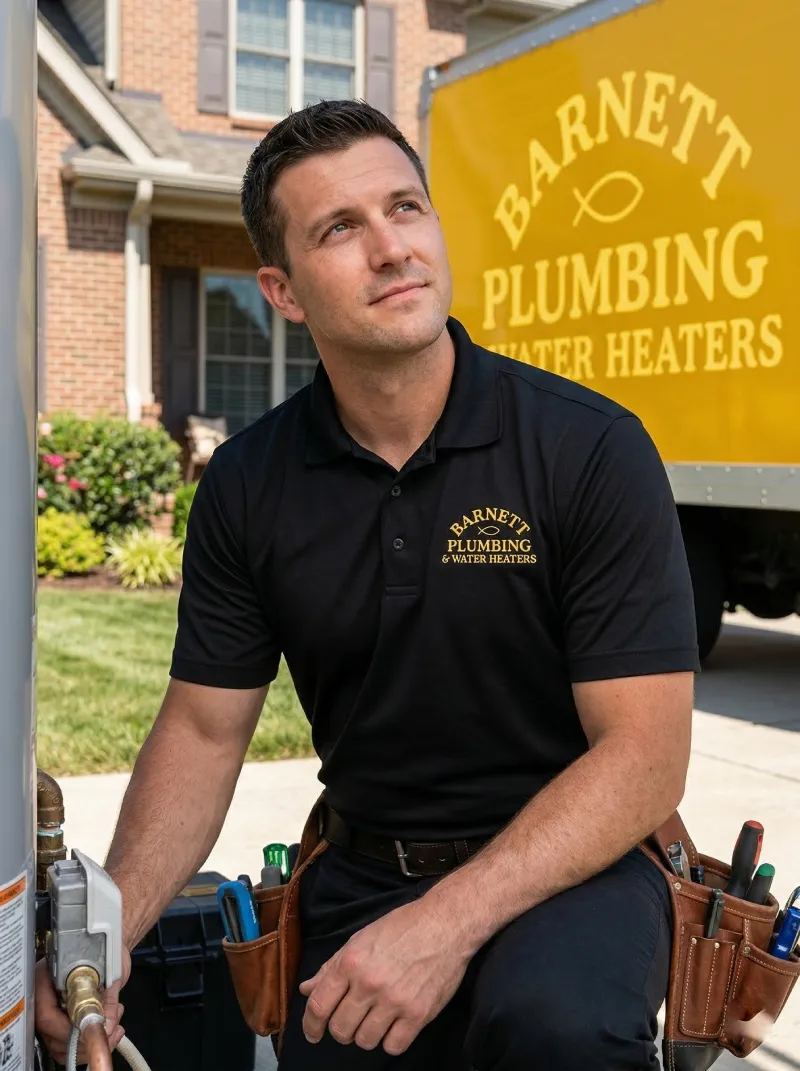
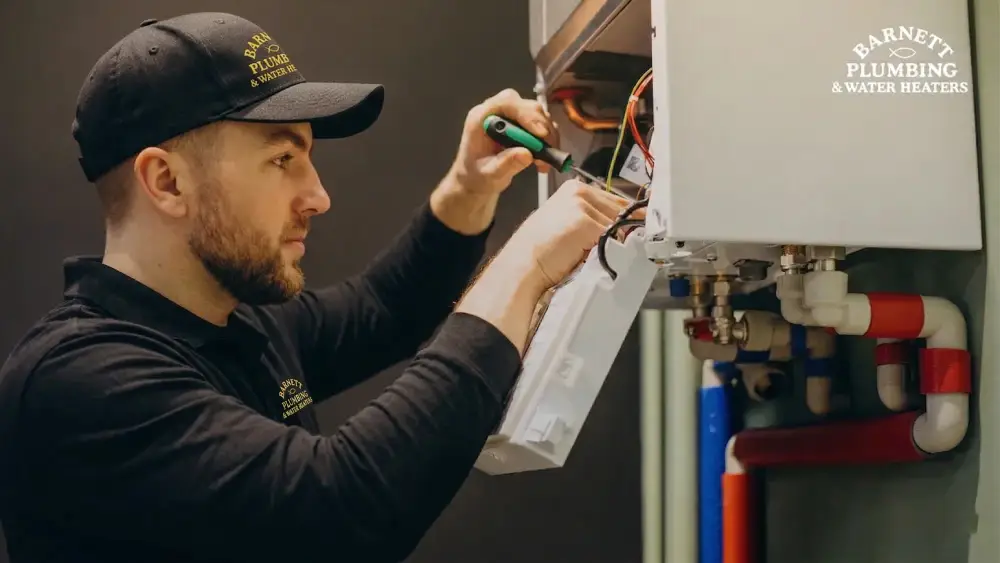
Barnett Plumbing technician with service truck
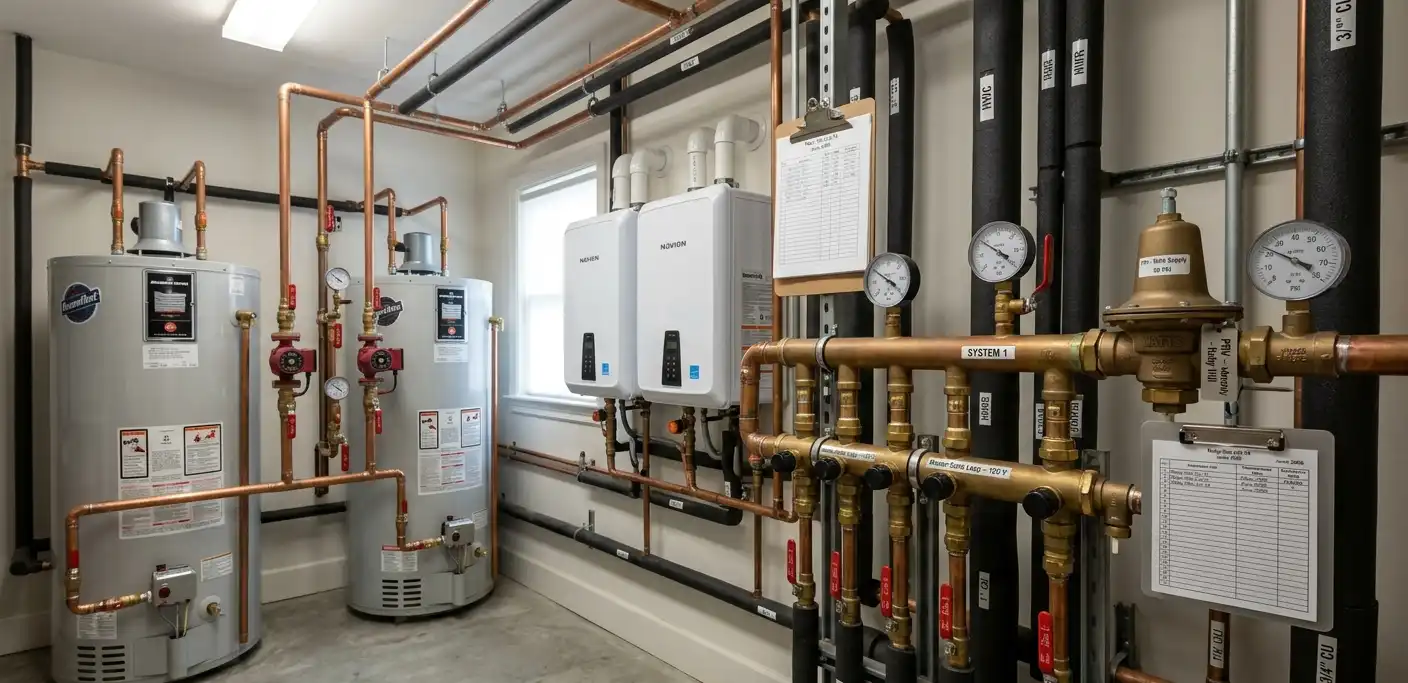
Bradford White water heater

Professional-Grade Equipment, Locally Sourced

We work with trusted manufacturers including Rheem, AeroTherm, Bradford White, and American Standard — sourced through Tri-Valley distributors so parts and warranty support remain local.

Pleasanton is also home to a growing number of multi-generational households and properties with in-law units or accessory dwelling units (ADUs). These homes place significantly higher demand on hot water systems, supply lines, and sewer connections than a standard single-family layout. If your household includes extended family, a granny flat, or a converted garage unit, your plumbing infrastructure may be operating well beyond its original design capacity—and that's exactly the kind of assessment we perform before recommending any upgrades.

Request Plumbing Service

Fill out the form below and we'll get back to you promptly.

"*" indicates required fields

This field is for validation purposes and should be left unchanged.

Contact Us Today

Need Plumbing Help in Pleasanton?

Call (925) 399-8782
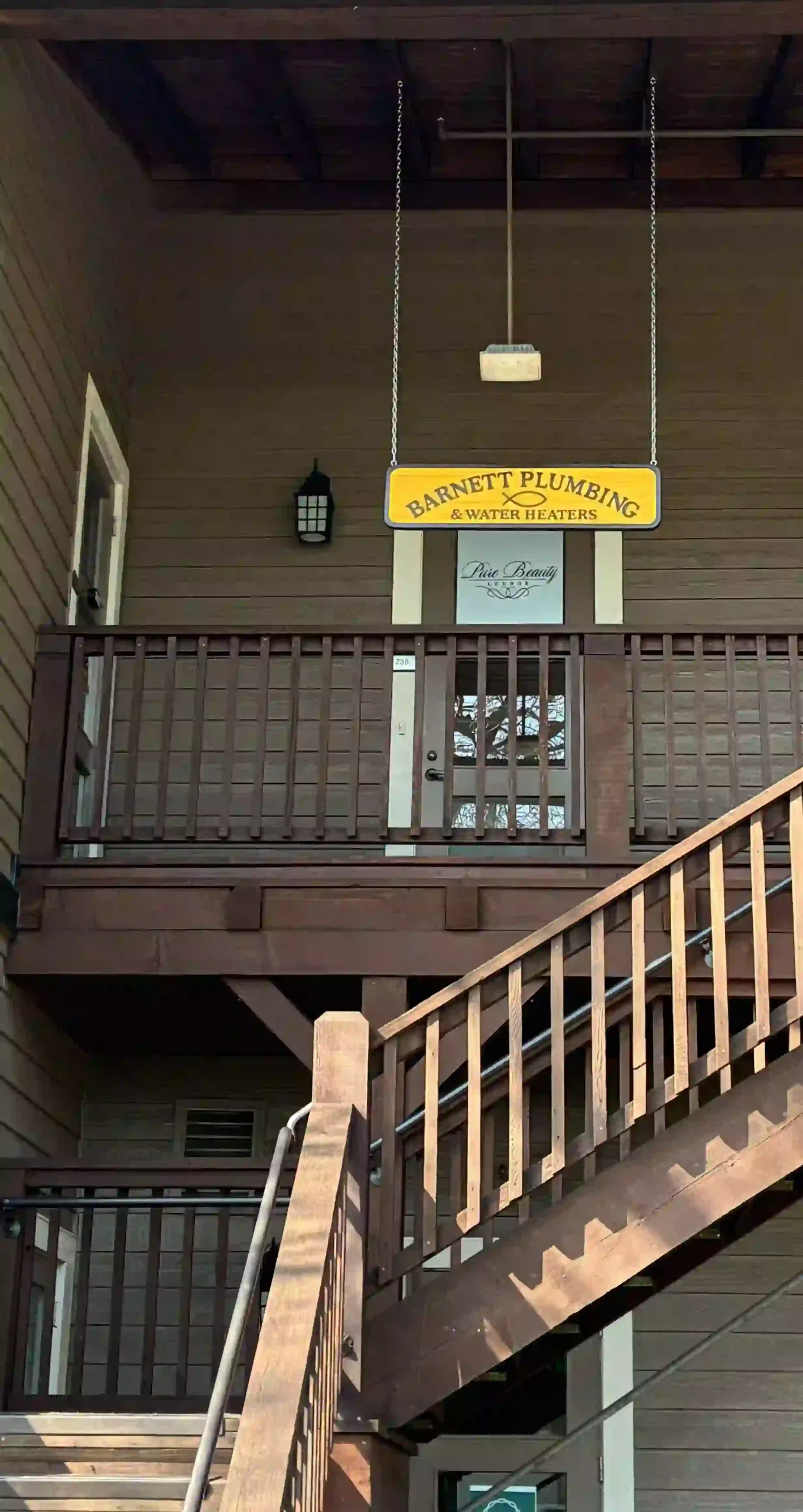
Barnett Plumbing Pleasanton signage

How Pleasanton's Local Environment Affects Your Home's Plumbing

Pleasanton sits at the base of the eastern foothills of the Amador-Livermore Valley, and the physical landscape here creates plumbing conditions you won't find in a generic service guide. Understanding these local factors is the difference between a repair that lasts and one that fails within a few years.

Expansive Clay Soils

Expansive clay soils are prevalent across much of the valley floor. These soils swell when saturated during the rainy season and contract through Pleasanton's long, dry summers. That seasonal movement puts direct mechanical stress on underground sewer pipes, water supply lines, and slab foundations—contributing to joint separations, hairline fractures, and eventual sub-slab leaks. If your home was built on a slab foundation in the 1970s through 1990s, this soil cycle has been working against your plumbing for decades.

Water Table & Drainage Patterns

Water table and drainage patterns vary significantly across town. Homes near Arroyo de la Laguna, Arroyo del Valle, or other creek beds and seasonal drainages tend to sit closer to the water table. Higher groundwater means increased hydrostatic pressure against foundations, greater risk of moisture intrusion into crawl spaces, and heavier reliance on sump pump systems that need to be properly sized and regularly maintained.

Water heater maintenance in Pleasanton home

Protecting Your Home's Most Critical Systems

Pleasanton's unique combination of soil conditions, temperature extremes, and aging infrastructure means your plumbing needs an expert who understands local challenges — not a generic service call.

Prolonged High Temperatures & Sun Exposure

Hot, dry Pleasanton summers commonly top 95°F, and prolonged heat and sun exposure accelerate wear on outdoor plumbing. Sustained UV and high temperatures degrade rubber seals and O-rings, cause plastics and PVC fittings to soften, warp or become brittle, break down pipe insulation and protective coatings, and increase thermal cycling that loosens joints and speeds corrosion of unprotected metal fittings and soldered connections. To limit damage, install UV-rated and weather-resistant components, insulate and shade exposed pipes and backflow devices, apply protective coatings, replace rubber hoses and seals on a regular schedule, bury or reroute vulnerable lines when possible, and perform a post-summer inspection to catch heat-related deterioration early.

Exposed plumbing components such as copper and PVC lines, hose bibs, rubber O-rings and seals, plastic connectors and insulation are vulnerable to drying, cracking, embrittlement, accelerated corrosion and UV degradation, which can cause leaky joints and pressure failures. Reduce risk by inspecting exposed piping at least twice a year and after major weather events, replacing degraded seals and O-rings every few years, wrapping pipes with UV-rated insulation or tape, fitting hose-bib covers and shade or enclosures, using dielectric fittings or protective coatings on dissimilar metals, tightening or pressure-testing suspect joints, and promptly repairing or replacing brittle plastic parts.

Hose bibs, exterior pipe fittings, rubber supply lines and the seals in outdoor shut-off valves do deteriorate more quickly when exposed to extended sunlight and high temperatures. Ultraviolet light breaks down elastomers and many plastics, causing rubber hoses and O-rings to harden, crack and lose elasticity; heat and UV also wear away protective coatings on metal fittings, promoting corrosion and weakening joints, and repeated thermal cycling speeds up seal compression set and failures. Inspect outdoor fixtures at least once a year, replace rubber supply lines or hose connectors every 3–5 years or sooner if you see cracking or stiffness, apply silicone-compatible lubricants to seals, and protect exposed components with UV-resistant hoses, braided stainless lines, insulated covers or frost-free valves to extend service life.

Rodent Activity in Crawl Spaces

There is another factor many homeowners don't consider: rodent activity in crawl spaces. Rats and mice are drawn to the warmth and shelter beneath Pleasanton homes, and they are known to gnaw on PEX (cross-linked polyethylene) supply lines—the flexible tubing used in many homes built or repiped since the mid-1990s. A rodent chewing through a PEX line under your house can cause catastrophic water damage before you even realize there's a problem. If you have PEX plumbing and notice signs of rodent activity (droppings, gnaw marks, scratching sounds), an inspection of your supply lines is a smart precaution.

Neighborhood-Specific Plumbing Challenges Across Pleasanton

Not every neighborhood in Pleasanton faces the same plumbing demands. The age of the housing stock, terrain, and original construction methods all vary by area. Here is what we encounter regularly in the neighborhoods where we work most often.

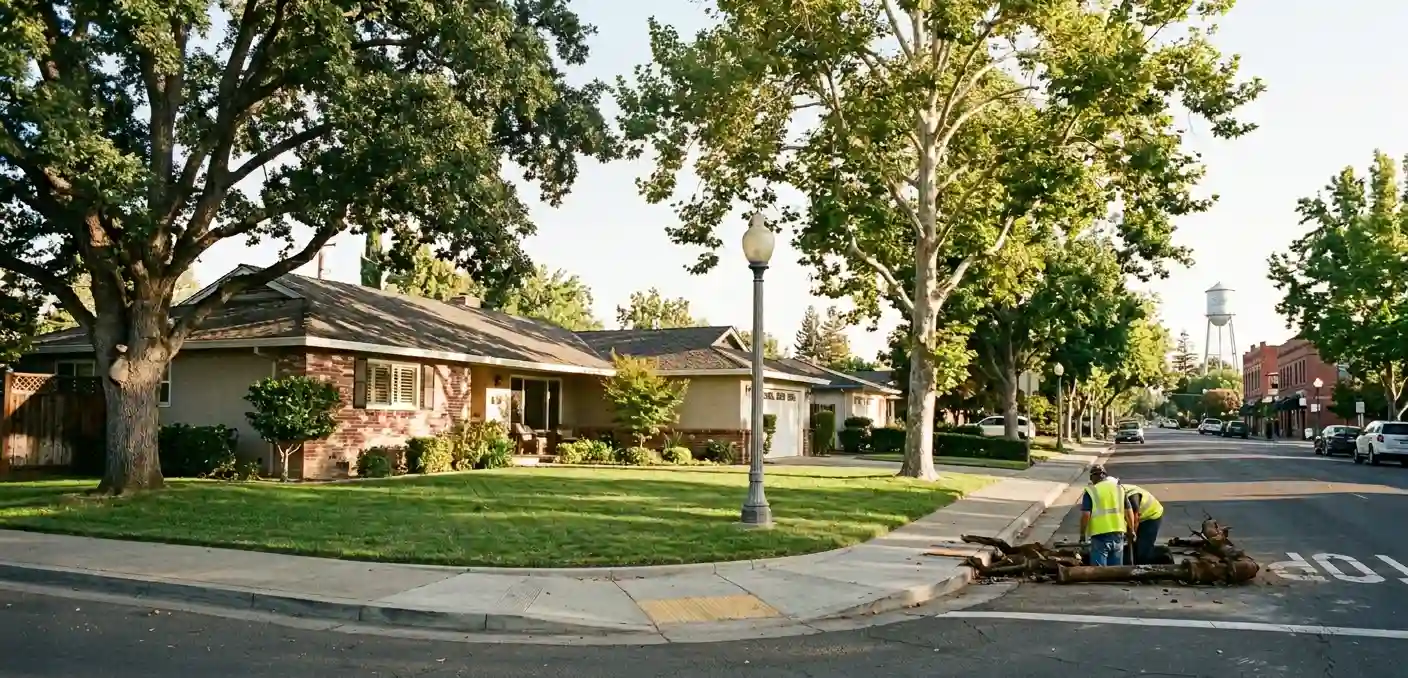
Downtown Pleasanton & Older Subdivisions

1950s–1970s
Cast Iron Sewers Root Intrusion Galvanized Steel Tight Crawl Spaces

Many homes in the original downtown core and surrounding streets were built in the 1950s through 1970s. In these properties, we frequently encounter original cast iron or clay sewer lines that have reached or exceeded their functional lifespan. Tree root infiltration is particularly aggressive here, where large mature trees—some of them heritage specimens—have had decades to seek out moisture from aging pipe joints. These homes are also prime candidates for whole-house repiping, especially those still running on galvanized steel supply lines that restrict water flow and leach rust into the tap water. Tight crawl space access is common in this era of construction, which means the plumbing team doing the work needs both the experience and the equipment to operate effectively in confined spaces.

Ruby Hill

Late 1990s–2000s
Multiple Hot Water Systems Pressure Regulation Concealed Solutions

This gated community features larger custom and semi-custom homes built from the late 1990s through the 2000s. The plumbing challenges here tend toward higher-end concerns: multiple hot water systems serving large square footage, complex fixture counts, and the homeowner expectation for quiet, concealed plumbing solutions—recirculation loops, hidden water heating equipment, and low-noise sump pumps. Water pressure regulation is also common in Ruby Hill, as some lots sit at elevations where incoming municipal pressure exceeds safe residential operating range.

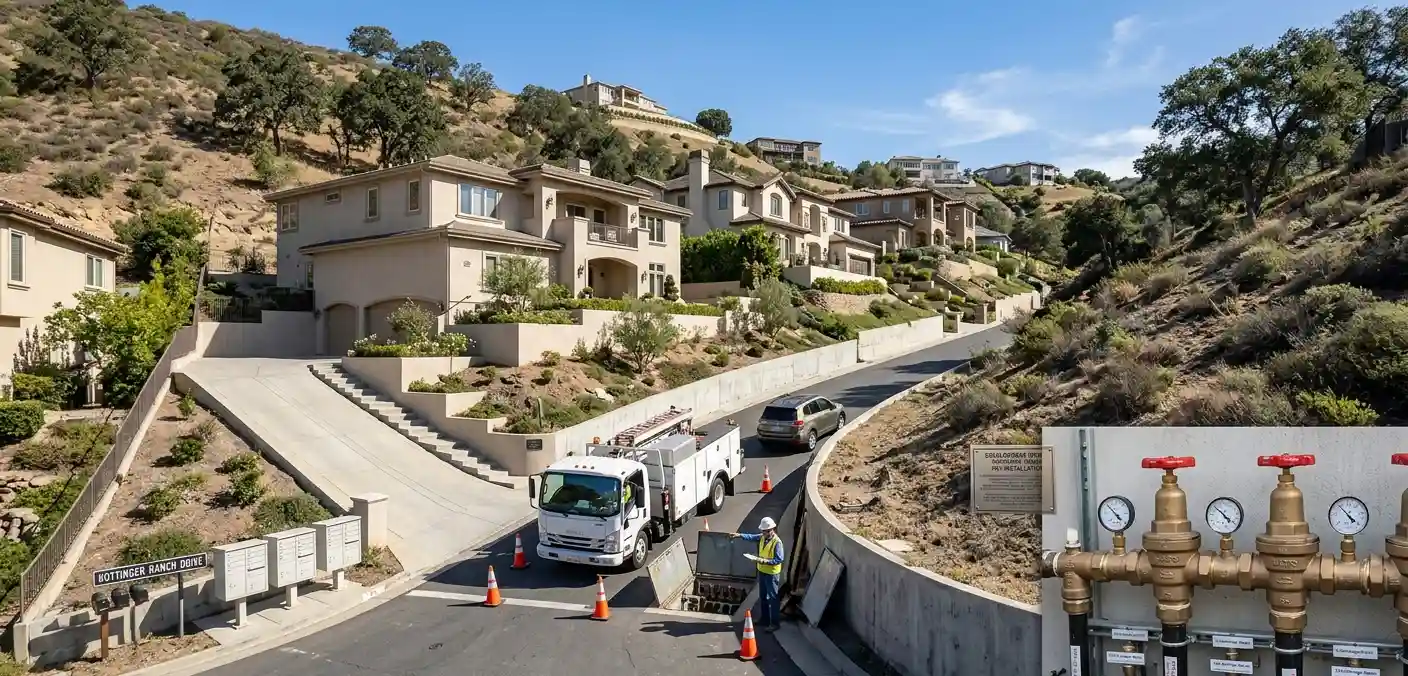
Kottinger Ranch

Hillside Homes
Hillside Access Pressure-Reducing Valves Elevation Challenges

Hillside homes in Kottinger Ranch present access challenges that add complexity to every project. Steeper driveways, tighter lot configurations, and the logistics of getting equipment and materials to elevated properties mean that not every plumbing contractor is equipped—or willing—to service these homes effectively. Pressure-reducing valves are standard in this area, and they require periodic inspection and replacement to protect fixtures, appliance connections, and supply lines from damaging pressure spikes. The hillside terrain also makes sewer line work more involved, as grade and elevation changes directly affect pipe slope and drainage performance.

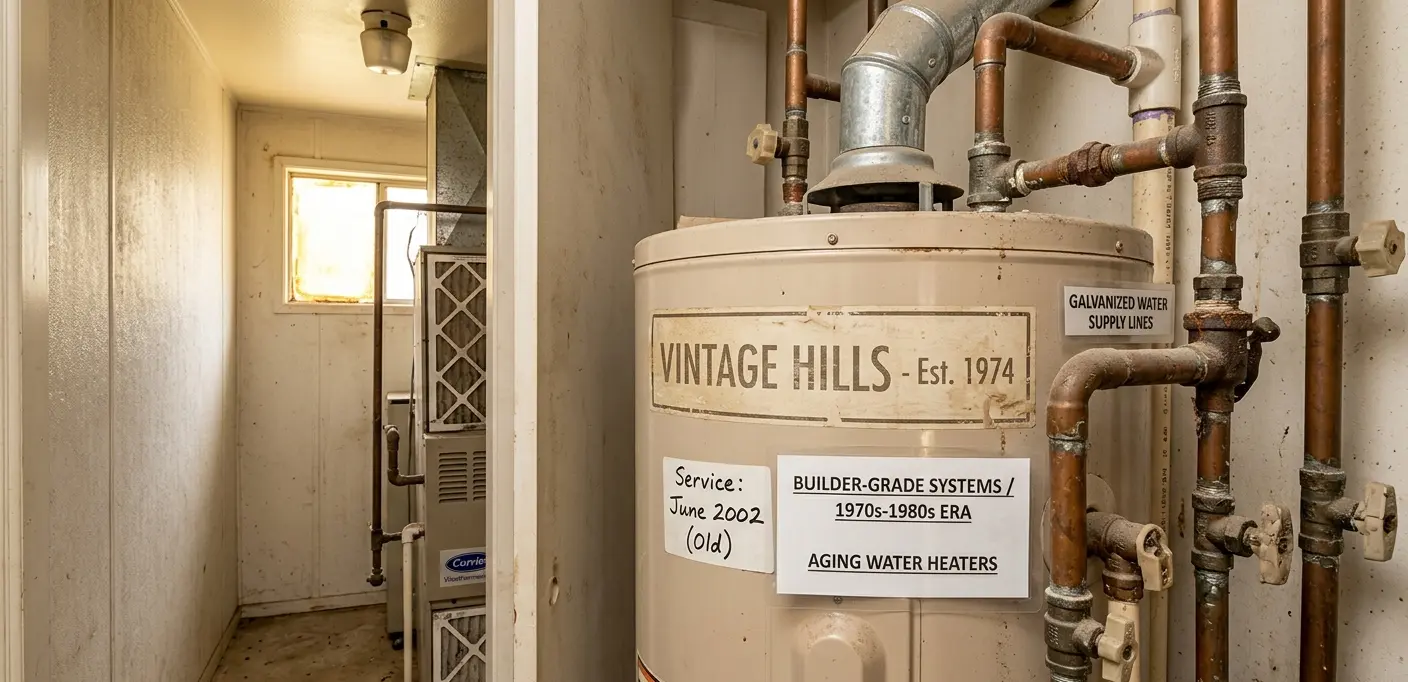
Vintage Hills

1970s–1980s
End-of-Life Piping Pinhole Leaks Repipe Threshold

Homes in this established neighborhood typically date from the 1970s and 1980s, placing them squarely in the window where original builder-grade hot water units, supply piping, and sewer connections are reaching end-of-life. Many of these properties are now at the 30-to-50-year repipe threshold, and homeowners here are increasingly dealing with pinhole leaks in copper, failing water heating equipment, and slow drains caused by deteriorating underground waste lines. Yes — if your Vintage Hills house still relies on original piping, you are probably at or past the stage where replacing the system proactively makes more financial sense than paying for recurring repairs. When pipes are 40–50 years old or exhibit repeated leaks, visible corrosion, rust-colored or metallic-tasting water, low pressure, or frequent patched sections, a planned partial or full repipe with modern materials (for example PEX or copper) typically reduces lifetime costs and lowers the chance of major water damage. Arrange for a licensed plumber to inspect the piping, document material and condition, and provide a written estimate that compares projected repair expenses with the upfront replacement cost so you can decide based on lifecycle costs rather than emergency fixes.

Pipe Material Lifespan Timeline

Galvanized Steel
30–50 yrs
EXPIRED for 1970s homes
Copper
50–70 yrs
Approaching for 1960s–70s
Cast Iron
50–75 yrs
EXPIRED for pre-1970s
PEX
40–50+ yrs
Newer, but rodent risk

Schedule Your Plumbing Assessment

Tell us about your home's plumbing needs.

"*" indicates required fields

This field is for validation purposes and should be left unchanged.

Contact Us Today

Schedule Your Service Today

Call (925) 399-8782

Slab Leaks in Pleasanton: What to Watch For and How We Fix Them

Slab leaks are one of the most stressful plumbing problems a Pleasanton homeowner can face—and one of the most common, given the age and soil conditions across much of the city. A sub-slab leak means a water supply or drain line running beneath your home's concrete foundation has cracked, corroded, or separated, and water is now escaping into the ground below your floors.

Concerned homeowner discovering water damage on kitchen floor

6 Warning Signs of a Slab Leak

1 Sound of running water when all fixtures are off
2 Warm or damp spots on your floor
3 Spike in your East Bay MUD bill
4 Cracks in foundation or walls
5 Persistent mildew odor
6 Water meter keeps spinning
⚠️

Symptoms

Symptoms you may notice: The sound of running water when all fixtures are off. Warm or damp spots on your floor, particularly on tile or hardwood. An unexplained spike on your East Bay MUD water bill. Cracks forming in your foundation or interior walls. A persistent mildew odor with no visible source. A water meter that continues spinning after you've shut off every tap and appliance in the house.

🚫

Why DIY Fails

Why the DIY approach fails here: Beneath-the-foundation leaks are not a weekend project. Accurate detection requires specialized electronic equipment—guessing the location and jackhammering exploratory holes into your foundation risks structural damage and wasted money. In older Pleasanton homes, disturbing the slab can also expose materials that require professional handling. Beyond the technical difficulty, any repair to structural plumbing beneath a foundation in Pleasanton requires a City of Pleasanton permit and inspection to verify the work meets current CPC requirements. Unpermitted slab repairs can create disclosure complications when you sell your home and may void your homeowner's insurance coverage for future water damage claims.

🔧

How We Fix It

How we fix it: Barnett Plumbing uses advanced electronic and acoustic leak detection to pinpoint the failure location without tearing up your entire slab. Once the breach is located, the repair approach depends on severity and overall pipe condition. A single-point failure may call for a spot repair—opening a small section of slab, replacing the damaged pipe segment, and resealing. If the pipe has deteriorated along its length, pipe rerouting (running a new line through the wall or ceiling to bypass the slab entirely) or epoxy pipe lining may be the better long-term solution. We walk you through each option—including cost implications and expected service life—so you can make the decision that fits your home and your budget.

Tree Root Intrusion in Pleasanton Sewer Lines

Pleasanton's mature tree canopy is one of the city's most valued features—but those root systems are actively seeking moisture, and your underground waste line is an irresistible target. Root infiltration is the leading cause of sanitary sewer pipe failure in older Pleasanton neighborhoods, particularly where original clay or cast iron drain pipes have developed cracks, joint separations, or corroded fittings over 40 to 60 years of use.

⚠️

Symptoms

Symptoms you may notice: Recurring slow drains, especially on the lowest level of your home. Gurgling sounds from toilets or floor drains after running water elsewhere in the house. Sewage odor in the yard, crawl space, or near cleanout access points. Patches of unusually green or lush grass directly over the sewer line path. Repeated drain backups that return weeks after clearing.

🚫

Why DIY Fails

Why the DIY approach fails here: Renting a drain snake addresses the symptom, not the underlying problem. Yes — roots commonly regrow within weeks to months. The vague part is the phrase 'entry points in the pipe remain open' because it doesn't explain that those openings are usually cracks, loose joints, failed seals or offsets, nor that residual root fragments, persistent moisture and nutrients draw roots back. Roots exploit those breaches and will sprout from remaining root tissue; the speed of return depends on the tree species, season, and how much root was left behind. To stop recurrence, you must seal or repair the damaged section or use targeted root-control methods rather than only cutting the roots. Chemical root killers can further damage the pipe walls and introduce environmental concerns. And critically, if your sewer lateral extends from your home to the city main within the public right-of-way, that portion requires a Utility Encroachment Permit from the City of Pleasanton before any repair or replacement work can begin. Unpermitted work in the right-of-way exposes you to fines and potential liability for damage to public infrastructure.

🔧

How We Fix It

How we fix it: We begin with a sewer camera inspection to visually confirm root penetration, identify the pipe material, and assess the full extent of damage. For moderate root invasion where the pipe walls remain structurally sound, mechanical rootering combined with follow-up hydro-jetting can restore full flow. If the pipe itself is compromised, trenchless pipe lining (cured-in-place pipe, or CIPP) creates a smooth new pipe within the old one—without excavating your yard or landscaping. For severe structural failure or collapsed sections, pipe bursting—a trenchless replacement method that fractures the old pipe outward while pulling a new HDPE line through the same path—avoids the cost and disruption of traditional open-trench excavation in most situations.

Two Barnett Plumbing technicians consulting on-site in a California backyard

Pleasanton Plumbing Permits, Codes, and What You Need to Know

Major plumbing work in Pleasanton is regulated, and for good reason—permits and inspections protect your home's safety, your investment, and your neighbors. Barnett Plumbing handles all permitting on your behalf, but here is what informed homeowners should understand about local requirements:

  1. Permits are required for most significant plumbing work in Pleasanton, including hot water system replacement, whole-house repiping, sewer line replacement, and new gas line installation. The City of Pleasanton Building Division issues these permits and conducts the required inspections.
  2. California Plumbing Code (CPC) compliance is mandatory for all permitted work. Every installation and repair must conform to the current edition of the CPC, including energy-efficiency and safety requirements specified under CALGreen Division 4.303.
  3. Water-Conserving Plumbing Fixtures Certificate: When pulling a permit, a certificate confirming that all fixtures comply with current water conservation standards must be submitted. This reflects Pleasanton's alignment with statewide water-use reduction goals.
  4. Utility Encroachment Permit: If your project involves work in the public right-of-way—most commonly sewer lateral replacement or repair between your property line and the city main—a separate encroachment permit is required from the City of Pleasanton.
  5. Noise considerations: While Pleasanton does not impose specific construction-hour limitations, all project-related noise must comply with the general Pleasanton Noise Ordinance. In practice, this means avoiding excessive noise between 10:00 p.m. and 6:00 a.m. We schedule our work to be respectful of your neighborhood.

We manage every step of this process. When you hire Barnett Plumbing, your permits are filed, your inspections are scheduled, and your completed work is fully documented and code-compliant.

Ready to Get Started?

Call (925) 399-8782

Why Pleasanton Homeowners Choose Barnett Plumbing & Water Heaters

Google Reviews - 900+ Five Star Reviews BBB A+ Rating Energy Skilled Certified

Trusted by homeowners across the Tri-Valley for over 20 years. Licensed (License #910529), insured, and bonded in the State of California.

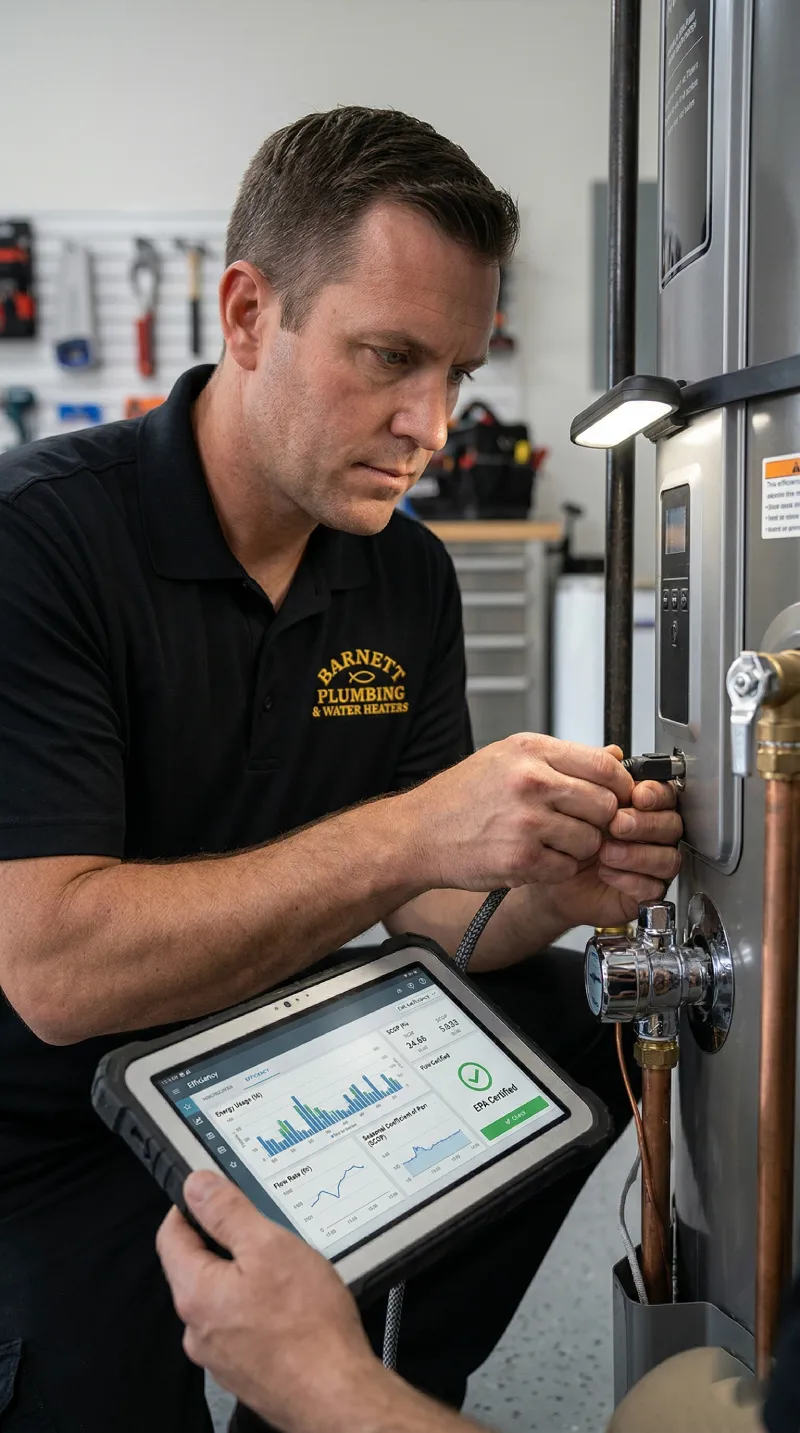
Barnett Plumbing water inspection
Best water heater brands — Rheem, Bradford White, AeroTherm

Barnett Plumbing & Water Heaters is a locally owned and operated plumbing company headquartered at 4713 First Street, Suite 242, Pleasanton, CA 94566. We are licensed by the State of California, fully insured, and bonded. With over 20 years of hands-on experience and more than 900 five-star reviews from homeowners across Alameda and Contra Costa counties, our reputation is built on consistent, verifiable results—not marketing claims.

We serve Pleasanton and the surrounding Tri-Valley communities with the full range of services your home actually requires: hot water system installations (tank, on-demand, and hybrid electric models), whole-house repiping, main drain line diagnosis and replacement, water purification systems, leak detection, drain service, gas line work, and complete fixture installation. We work with trusted manufacturers including Rheem, AeroTherm, and American Standard, sourced through Tri-Valley distributors so parts and warranty support remain local.

Every technician arrives prepared to diagnose your issue accurately and present repair options clearly—including honest assessments of when a repair makes sense versus when replacement is the more cost-effective path forward. We pull all required permits, coordinate inspections, and adhere to the California Plumbing Code on every job, without exception.

Call (925) 399-8782 to schedule service or request a consultation.

Call Now

Featured Pleasanton Projects

Directions to Barnett Plumbing from Downtown Pleasanton

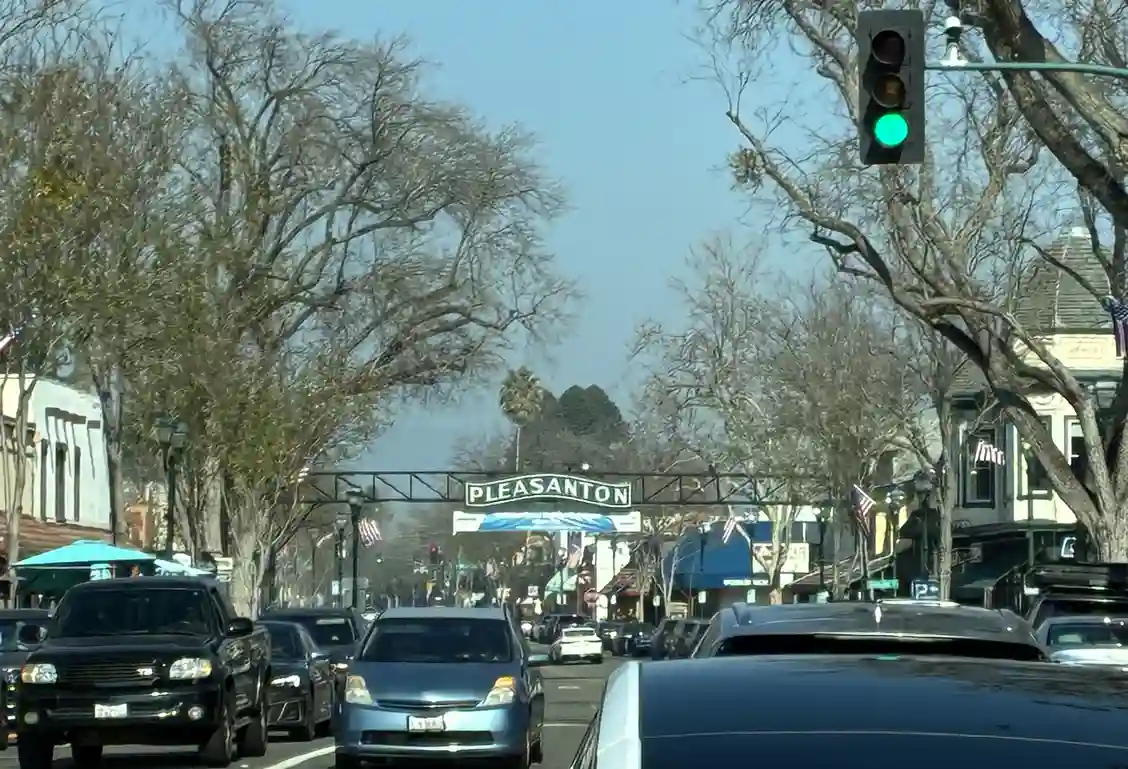
From the Pleasanton Arch (Main Street)

Start at the Pleasanton Arch on Main Street in downtown Pleasanton. Head south on Main Street toward First Street. Turn right (west) onto First Street and continue approximately one-third of a mile. Our office is located at 4713 First Street, Suite 242, on the right-hand side. The drive from downtown takes roughly two minutes. Street parking is available along First Street, and there is additional lot parking adjacent to the building.

From Stoneridge Shopping Center

If you're coming from Stoneridge Shopping Center, head east on Stoneridge Drive toward Hopyard Road. Turn right (south) onto Hopyard Road and continue to First Street. Turn left (east) onto First Street and continue approximately one mile. Our office will be on the left-hand side at 4713 First Street, Suite 242. The drive takes approximately five minutes depending on traffic.

Contact Barnett Plumbing & Water Heaters Today for More Information

When a water heater needs assessment, repair, or replacement, arrange qualified service right away so a small fault doesn't turn into a much more expensive failure. Call a licensed plumber who offers prompt response (same-day or emergency options), performs a targeted inspection of the tank, valves, heating element or burner, anode rod, venting and pressure-relief valve, tests temperature and water pressure, and provides a written diagnosis with a clear estimate. Many problems are minor and can be fixed on the first visit, but if the unit is leaking, heavily corroded, older than about 8–12 years, or requires repeated repairs, replacement is usually the more cost-effective solution. Contact us online or call (925) 294-0171 today to get started.