


When water drains slowly, hair collects around a shower opening, or grease coats a kitchen drain, regular drain maintenance can keep these small issues from becoming complete blockages. Common drain maintenance tips include using drain strainers and hair catchers, removing visible debris, keeping grease and food scraps out of kitchen drains, avoiding flushing wipes and hygiene products, cleaning drain covers and stoppers, and addressing slow drainage early.
Maintenance should also match the drain type. Kitchen sinks need grease and food control, while bathroom sinks, showers, and tubs need regular hair and soap-residue removal. Toilet drains require careful flushing habits, while floor drains need periodic cleaning and inspection. Clean frequently used components regularly, do routine DIY maintenance, and schedule yearly professional inspections when appropriate. For minor buildup, use hot water, baking soda and vinegar, enzyme cleaners, plungers, or drain snakes. Avoid mixing chemicals or forcing tools, and address slow drainage, gurgling, odors, standing water, or recurring clogs early to support proper drain maintenance and prevent blockages.
Here are 8 practical tips for maintaining your drains:
Use drain strainers and hair catchers.
Keep grease, oils, and food debris out of kitchen drains.
Keep wipes, cotton swabs, and hygiene products out of toilets.
Remove visible hair, soap residue, and debris regularly.
Clean drain covers, stoppers, and strainers.
Use appropriate drain-cleaning methods and products.
Address slow drains before they become complete blockages.
Get professional help for recurring or multiple drain problems.
8 Drain Maintenance Tips That Every Homeowner Should Follow
- Use drain strainers and hair catchers
Install drain strainers and hair catchers to stop hair, food particles, soap residue, and other debris before they enter the drainpipe and contribute to clogs. Place hair catchers over shower, bathtub, and bathroom sink drains, and use strainer baskets in kitchen sinks to collect food scraps while allowing water to flow through normally.
Remove trapped debris frequently and rinse the strainer or catcher clean before placing it back over the drain. Do not wash the collected material down the sink because it can accumulate farther inside the pipe. Regular cleaning keeps the strainer working effectively and helps reduce slow drainage and recurring blockages.
- Keep grease, oils, and food debris out of kitchen drains
Keep grease, cooking oils, and food debris out of kitchen drains to prevent buildup that can restrict water flow and cause stubborn clogs. Grease and oils can cool, thicken, and stick to pipe walls, while food particles become trapped in the residue and gradually narrow the drainpipe.
Let used grease and oil cool, collect it in a suitable container, and dispose of it with the appropriate household waste instead of pouring it into the sink. Scrape food scraps from plates, pans, and cookware into the trash or compost before washing. These habits limit the solid and fatty material entering the plumbing and help keep kitchen drains clear over time.
- Keep wipes, cotton swabs, and hygiene products out of toilets
Avoid flushing wipes, cotton swabs, and hygiene products because they do not break down quickly like toilet paper and can become lodged in toilet drains and sewer lines. Baby wipes, cleaning wipes, “flushable” wipes, cotton swabs, cotton pads, tampons, sanitary pads, diapers, dental floss, and paper towels can remain intact, catch other waste, and contribute to stubborn blockages and backups. Even products labeled “flushable” may clear the toilet bowl without breaking apart properly farther through the plumbing system.
Dispose of these products in the trash instead of the toilet to reduce non-degradable material entering the drainage system. Use a waste bin for wipes, cotton products, sanitary items, paper towels, and similar household waste, and limit flushing to human waste and toilet paper.
- Remove visible hair, soap residue, and debris regularly
Eliminate visible hair, soap residue, and debris from drain openings before these materials collect and restrict water flow. Hair can tangle around drain components and trap soap scum, skin cells, and other debris, gradually forming a denser buildup that contributes to slow drainage and blockages.
Wear gloves and pull out visible hair and debris by hand, or use a small drain-cleaning tool where necessary. Clear the drain opening after showers, baths, and routine bathroom cleaning, then dispose of the removed material in the trash. Removing buildup at the drain entrance helps prevent it from moving deeper into the pipe and keeps water draining more freely.
- Clean drain covers, stoppers, and strainers
Clean drain covers, stoppers, and strainers to clear trapped hair, soap residue, food particles, and other debris before it builds up around the drain opening. Lift or unscrew removable components according to their design, pull away collected debris, then wash the parts with warm water and soap before reinstalling them. Cleaning these components also gives you access to visible buildup directly beneath the drain opening.
Check and clean these parts whenever visible debris begins to collect, with more frequent attention in heavily used kitchen sinks, showers, and bathroom sinks. Keeping covers, stoppers, and strainers clear prevents trapped material from restricting the opening and helps water flow freely. Remove collected debris as soon as you notice it so it does not pass deeper into the drainpipe and contribute to a clog.
- Use appropriate drain-cleaning methods and products
Use drain-cleaning methods such as hot water, enzyme-based cleaners, plungers, and drain snakes according to the type of clog and the condition of the pipes. Hot water may help with light grease or soap residue, enzyme cleaners can break down organic buildup, plungers can loosen shallow blockages, and drain snakes can remove hair or debris lodged farther inside the drain.
Avoid harsh chemical drain cleaners because caustic products can generate heat, damage older or vulnerable pipes, and create safety risks if they sit in standing water or mix with other products. Follow the manufacturer’s instructions for any cleaner you use, including dosage, contact time, ventilation, and pipe compatibility. If a clog remains after proper mechanical cleaning, arrange professional drain service instead of repeatedly adding stronger chemicals.
- Address slow drains before they develop into complete blockages
Check slow drains as soon as you notice signs such as water pooling, delayed draining, bubbling, or gurgling sounds. These symptoms can indicate that hair, soap residue, grease, food particles, or other debris is already restricting water flow inside the pipe. Leaving the buildup in place can let more material collect until the drain becomes fully blocked or backs up.
Clear minor buildup with an appropriate method such as removing visible debris, using a plunger, or using a drain snake when suitable for the fixture. If drainage remains slow, affects several fixtures, or returns after cleaning, have a plumber check for a deeper blockage or another underlying issue. Acting early can reduce the likelihood of backups, water damage, and more extensive plumbing repairs.
- Get professional help for recurring or multiple drain problems
Call a professional plumber when drain problems keep returning or affect several fixtures at the same time. Repeated clogs, persistent foul odors, gurgling sounds, slow drainage across multiple fixtures, or water backing up into sinks, tubs, or showers can indicate a deeper blockage, main drain problem, tree-root intrusion, or damaged pipe rather than a simple fixture clog.
Arrange professional inspection when basic drain-clearing methods provide only temporary relief or fail to restore normal drainage. Plumbers can use equipment such as drain cameras, powered augers, and other specialized tools to locate and clear deeper obstructions or identify pipe damage that may not be accessible with household tools. Schedule a plumbing inspection as soon as these warning signs persist or recur to identify the underlying problem before it leads to sewage backups, leaks, or more extensive pipe repairs.
What Are the Most Common Causes of Clogged Drains?
The most common causes of clogged drains include hair and soap buildup, fats, oils, and grease, food scraps and coffee grounds, excess toilet paper, wipes and hygiene products, foreign objects, and mineral or scale buildup. These materials can collect inside drainpipes, restrict water flow, and eventually create partial or complete blockages.
5 most common causes of clogged drains are:
- Hair and soap buildup:
Hair enters shower, tub, and bathroom sink drains during washing and grooming, where it can tangle with sticky soap residue and form dense mats that restrict water flow. Drain covers and hair catchers help limit the amount of hair entering these fixtures and reduce gradual blockage formation.
- Fats, oils and grease
When fats, oils, and grease enter kitchen drains from cooking, rinsing pans, or washing dishes, they can cool, thicken, and stick to pipe walls, where they trap other debris. Dispose of FOG in the trash or appropriate waste collection instead of the sink to help prevent persistent kitchen drain blockages.
- Food scraps and coffee grounds:
If food scraps and coffee grounds enter kitchen drains during food preparation, rinsing, or dishwashing, they can accumulate with grease and other residue inside pipes. Dispose of these materials in the trash or compost to keep solids out of kitchen plumbing and reduce slow drainage and clogs.
- Excess toilet paper
Too much toilet paper refers to flushing more paper at one time than the toilet and drain can move through efficiently, potentially creating a mass that restricts wastewater flow. Using moderate amounts and flushing in stages when necessary can reduce the likelihood of toilet blockages.
- Wipes and non-flushable hygiene products
Wipes, sanitary products, cotton items, and similar products do not break apart in water as readily as toilet paper and can remain intact long enough to collect inside pipes. Even wipes labeled “flushable” can contribute to blockages, so place these products in the trash rather than flushing them.
- Foreign objects
Objects such as toys, jewelry, bottle caps, and other small household items can accidentally or intentionally enter toilets, sinks, or drains. These objects can lodge in traps or pipes and cause immediate or recurring blockages, so keep them away from open drains and toilets.
- Mineral or scale buildup
If calcium, magnesium, and other hard-water deposits accumulate inside pipes, mineral scale can gradually reduce the passage for water, creating restricted flow and slower drainage. Slow drainage, recurring clogs, gurgling, or other persistent drainage changes can indicate increasing restriction that may require further inspection or professional cleaning.
How Should You Maintain Different Drains Around the Home?
To maintain different drains around the home, keep kitchen sink drains free of grease and food debris, remove hair and soap buildup from bathroom sink, shower, and bathtub drains, flush only appropriate waste through toilet drains, and regularly clean and inspect floor drains. Matching maintenance practices to each drain type helps control buildup and reduces the risk of clogs and slow drainage.
How Do You Maintain Kitchen Sink Drains?
To maintain a kitchen sink drain, use a drain screen, remove trapped debris regularly, plunge minor clogs, use natural maintenance methods, clean the drain trap when necessary, and flush the drain with hot water. Regular maintenance limits residue and debris buildup, helping water drain properly and reducing the risk of recurring clogs.
- Install a drain screen or strainer: Place a properly fitted screen over the drain to catch hair and visible debris before it enters the pipe.
- Remove trapped debris regularly: Empty the screen and clear material collected around the stopper or drain opening before buildup moves deeper into the drain.
- Plunge slow drains when needed: Use a sink plunger on minor, shallow restrictions to help dislodge material near the drain opening.
- Use natural maintenance methods: Baking soda followed by vinegar can help loosen light residue, while salt and hot water can also be used for minor buildup.
- Clean the drain trap when necessary: Place a bucket underneath the P-trap, remove it carefully, clear accumulated debris, and reinstall it correctly.
- Flush with hot water: Periodic hot-water flushing can help loosen light soap residue and carry minor buildup through compatible plumbing.
How Do You Maintain Bathroom Sink Drains?
To maintain bathroom sink drains, install a drain screen, clear the stopper regularly, plunge minor blockages, use natural cleaning methods, clean the P-trap when needed, and flush compatible drains with hot water. These steps help limit hair, soap residue, toothpaste, and other debris that can restrict water flow and cause clogs.
- Install a drain screen or strainer: Place a properly fitted screen over the drain to catch hair, soap residue, and visible debris before they enter the pipe.
- Clear the stopper regularly: Remove hair and debris collected around the pop-up stopper because buildup in this area can contribute to slow drainage.
- Plunge minor blockages: Use a flat sink plunger periodically when drainage begins to slow, making sure the overflow opening is covered so pressure reaches the clog.
- Use natural cleaning methods: Pour baking soda followed by white vinegar into the drain for light buildup, or use salt followed by hot water as another routine option.
- Clean the P-trap when needed: Place a bucket beneath the trap, loosen the slip nuts, remove accumulated debris, reinstall the trap, and run water to check for leaks.
- Flush with hot water: Run hot water through the drain periodically to help loosen minor soap residue and carry light buildup through compatible plumbing.
How Do You Maintain Shower and Bathtub Drains?
To maintain shower and bathtub drains, install a drain cover or hair catcher, clear visible debris regularly, flush compatible drains with hot water, use baking soda and vinegar for minor buildup, and address slow drainage early. These practices help control hair and soap buildup before it restricts water flow or causes a clog.
- Install a drain cover or hair catcher: Place a properly fitted cover over the shower or bathtub drain to catch loose hair and debris before it enters the pipe.
- Clear visible debris regularly: Remove collected hair, soap residue, and other material from the drain cover and opening before it moves deeper into the drain.
- Flush with hot water periodically: Run hot water through compatible drains to loosen light soap residue and minor buildup. Avoid boiling water where PVC pipes are present.
- Use baking soda and vinegar for minor buildup: Pour baking soda into the drain, follow with white vinegar, allow the mixture to react, and flush with hot water afterward.
- Watch for slow drainage: Address water pooling, delayed tub drainage, or gurgling early because these signs can indicate developing hair and soap buildup inside the drain.
How Do You Prevent Toilet Drain Clogs?
To maintain toilet drains, flush only toilet paper and human waste, use moderate amounts of toilet paper, complete each flush properly, watch for slow drainage, and avoid repeated flushing when the bowl water is high. Following these habits keeps non-flushable materials out of the drain and lowers the chance of toilet clogs and overflows.
- Flush only toilet paper and human waste: Keep wipes, tissues, paper towels, hygiene products, cotton items, and other non-flushable materials out of the toilet because they can remain intact and obstruct the drain.
- Use moderate amounts of toilet paper: Avoid flushing excessive amounts at once because toilet paper can pack into the toilet trapway and contribute to blockages.
- Complete the flush properly: Hold the flush lever long enough for the tank to release sufficient water and allow the bowl contents to clear completely.
- Watch for slow drainage: Notice water rising higher than usual, draining slowly, gurgling, or taking longer to clear, as these can indicate a developing restriction.
- Avoid repeated flushing when water is high: If the bowl is already near the rim, do not flush again because additional water can cause an overflow.
How Do You Maintain Floor Drains?
To maintain floor drains, clear debris from the drain cover, flush with hot water periodically, use natural cleaning solutions for light buildup, watch for slow drainage, and inspect the drain regularly. Routine care keeps debris from collecting inside the drain and allows wastewater to move through the pipe without restriction.
- Clear the drain cover: Remove hair, lint, dirt, and other debris from the grate and surrounding area so material does not wash into the drain.
- Flush with hot water: Pour hot water through the drain periodically to help loosen light soap residue, grease, and minor buildup.
- Use a natural cleaning solution: Apply baking soda and vinegar for light residue or odors, then follow with hot water.
- Watch for slow drainage: Check for standing water, gurgling, recurring odors, or water taking longer to drain because these signs can indicate developing restrictions.
- Inspect the drain periodically: Check the cover, opening, and nearby area for debris or visible blockage, and keep infrequently used floor-drain traps filled with water to help prevent sewer odors.
How Often Should You Clean and Maintain Your Drains?
Clean and maintain drains by clearing covers and strainers regularly, removing buildup periodically, performing DIY cleaning every two weeks, and scheduling annual professional and main sewer line inspections, with frequency adjusted for drain use, conditions, extreme weather, or nearby works. A consistent maintenance schedule helps control buildup and identify developing drainage problems before they cause recurring clogs or backups.
- Regular drain-cover and strainer cleaning
Clean drain covers and strainers whenever visible hair, food, soap residue, or debris collects, especially on heavily used kitchen, shower, and bathroom drains. The required frequency depends on pipe condition, plumbing age, water hardness, household habits, and how often each drain is used.
- Periodic buildup removal
Remove developing buildup when you notice slow drainage, visible residue, or water taking longer to clear. Periodic removal prevents small accumulations of hair, grease, soap, and debris from progressing into larger blockages.
- DIY cleaning every two weeks
Perform light DIY drain maintenance about every 2 weeks where buildup occurs quickly, including clearing strainers, flushing compatible drains with hot water, and addressing light residue. This routine can help control odors and minor accumulation between deeper cleanings.
- Annual professional inspection
Consider a professional drain inspection about once a year for plumbing systems that are older, heavily used, or prone to recurring problems. Inspection can identify hidden restrictions, pipe deterioration, root intrusion, or other developing conditions before they cause backups
- Main sewer line inspection every 12 months
Inspect the main sewer line every 12 months to identify developing problems such as tree-root intrusion, buildup, cracks, offsets, or other structural issues before they cause major backups. Annual inspection is particularly important for older sewer lines, properties with mature trees, or homes with recurring clogs, while multiple slow drains, gurgling, or backups may require an earlier inspection.
- Commercial drain cleaning yearly or after extreme weather or works
Commercial systems generally require more frequent maintenance because higher usage increases the rate of grease, debris, and waste accumulation. Depending on the property, cleaning may be needed every few months to annually, with additional checks after flooding, construction, or major plumbing work.
- Maintenance frequency based on drain use and conditions
Adjust the schedule according to how heavily each drain is used and what enters it. Kitchen drains exposed to grease and food or bathroom drains exposed to hair and soap may need more attention than rarely used fixtures, while slow drainage, odors, or recurring clogs indicate that maintenance is needed sooner
Which Drain Cleaning Methods, Products and Tools Should You Use?
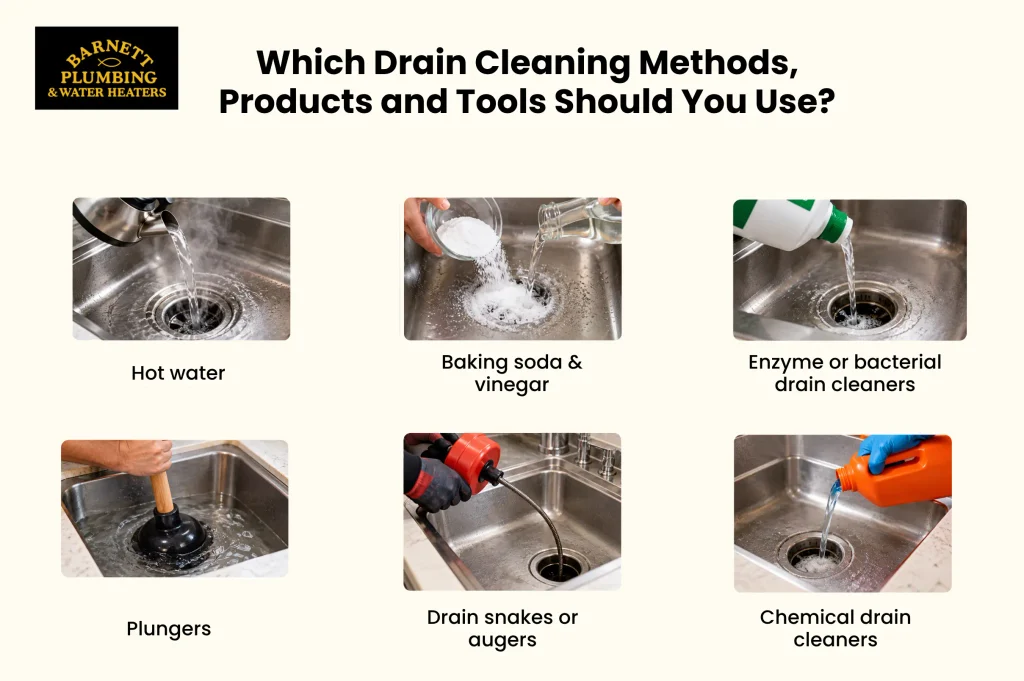
The drain cleaning methods, products, and tools you can use include hot water, baking soda and vinegar, enzyme or bacterial drain cleaners, plungers, drain snakes or augers, and chemical drain cleaners. Choose the method based on the type, location, and severity of the blockage to clear the drain safely and effectively.
Hot water
Hot water is a simple way to maintain drains and loosen minor buildup from grease, soap residue, and light debris. Running hot tap water through compatible kitchen, bathroom, shower, or tub drains softens residue along pipe walls and helps carry loosened material through the system. Because this approach works mainly on light deposits, it suits routine maintenance better than hair clogs, foreign objects, or complete blockages. Boiling water provides more heat for grease buildup, but avoid it with PVC pipes and porcelain fixtures because excessive heat can cause damage. Regular preventive flushing can help limit buildup in frequently used drains.
Baking soda and vinegar
For minor slow drainage and light organic buildup, you can use baking soda and vinegar as a DIY method. Remove standing water first, pour hot water into the drain, then add ½ to 1 cup of baking soda followed by about 1 cup of white vinegar. Cover the drain and allow the mixture to fizz for 5 to 15 minutes before flushing with hot water. The bubbling reaction helps loosen light residue and debris inside the pipe. This method is generally suitable for many residential drains and is intended for minor buildup rather than complete blockages.
Enzyme or bacterial drain cleaners
Enzyme or bacterial drain cleaners use natural enzymes and bacteria to break down organic waste such as grease, oils, hair, and soap scum inside drainpipes. Unlike chemical drain cleaners, these products work without harsh chemicals, making them safer for compatible pipes and the environment when used as directed. They work best for routine maintenance and gradual organic buildup, not solid objects or complete blockages. Use an enzyme or bacterial drain cleaner monthly according to the product instructions to help maintain active bacterial colonies and reduce organic buildup that can contribute to clogs.
Plungers
If a sink, tub, or toilet has a minor localized clog, a plunger can help dislodge the blockage by creating alternating pressure and suction around the drain opening. Cup plungers work best on flat sink and tub drains, while flange plungers are designed for toilets because they form a tighter seal. Plungers are generally safe for residential fixtures when used correctly, but excessive force can damage fragile plumbing or push some obstructions deeper. They work best for shallow, soft blockages and are less useful for severe, solid, or deep clogs.
Drain snakes or augers
Drain snakes or augers are tools designed to clear stubborn or deeper clogs that a plunger cannot reach. A flexible cable is fed into the drain and rotated so the tip can break apart, bore through, or hook onto hair, soap residue, food debris, and other buildup farther inside the pipe. They are especially useful for bathroom and kitchen drains when the blockage lies beyond the drain opening or P-trap. Proper technique is important because forcing, kinking, or using the wrong auger can scratch or damage pipes. They should also be avoided immediately after chemical drain cleaners have been used.
Chemical drain cleaners
When other basic methods do not clear a suitable clog, chemical drain cleaners can be used as a last-resort option to dissolve grease, hair, food, and other organic material. These products use caustic, oxidizing, or acidic chemicals that react with the blockage and break it down. Although effective for some clogs, they can generate heat, release harmful fumes, and damage older, rusted, or lightweight plastic pipes when misused. They can also introduce harsh chemicals into wastewater. Always follow the label instructions, use proper ventilation and protective equipment, and never mix different drain cleaners or household chemicals.
What Drain Maintenance Mistakes Should You Avoid?
Avoid drain maintenance mistakes such as pouring grease, oil, and food scraps down drains, flushing non-flushable materials, overusing or mixing chemical cleaners, forcing tools through drains, ignoring recurring slow drainage, and neglecting regular cleaning and inspections. Preventing these errors helps protect drainpipes from damage and reduces the risk of persistent clogs, backups, and costly plumbing repairs.
7 common drain mistakes you should avoid are:
- Pouring grease, oil, and food scraps down drains: Avoid pouring grease, oil, and food scraps into drains because they can accumulate, restrict water flow, and contribute to backups. Dispose of grease in a container and place food waste in the trash or compost instead.
- Flushing wipes and non-flushable materials: Flush only human waste and toilet paper, and place wipes, paper towels, feminine hygiene products, and similar items in the trash. These materials do not break down like toilet paper and can collect inside pipes and cause blockages.
- Overusing harsh chemical cleaners: Limit strong chemical drain cleaners, as repeated or improper use can create harmful fumes, generate heat, and damage vulnerable plumbing. Use appropriate mechanical or gentler maintenance methods for routine drain care whenever possible.
- Mixing different cleaning products: Never mix drain cleaners, bleach, or other household cleaning chemicals because dangerous reactions can release toxic gases or excessive heat. Use one product at a time and follow the manufacturer’s directions exactly.
- Forcing tools through drains: Use plungers, snakes, and augers with controlled pressure rather than forcing them through the pipe. Stop if you meet strong resistance because excessive force can damage traps, joints, fixtures, or pipe surfaces.
- Ignoring recurring slow drainage: Persistent slow flow can signal deeper buildup or a developing blockage that may eventually lead to a complete clog or backup. Address slow drainage when it repeatedly returns instead of allowing the restriction to worsen
- Neglecting regular cleaning and inspections: Check drains regularly and clear developing hair, grease, soap residue, and debris before significant buildup forms. Routine maintenance helps keep water flowing properly and makes early drainage problems easier to identify.
What Are the Signs of a Drainage Problem?
Signs of a drainage problem include slow drainage, recurring clogs, gurgling, persistent drain odors, standing water, water backing up into another fixture, and several drains slowing or clogging at the same time. Recognizing these warning signs early can help identify developing blockages or pipe problems before they lead to backups or more extensive plumbing issues.
7 common signs of a drainage problem are:
- Slow drainage: If water takes longer than normal to empty from sinks, tubs, or showers, hair, soap, grease, or debris may be restricting the pipe. Treat slow drainage as an early warning sign and clear the developing buildup before it progresses into a complete blockage.
- Recurring clogs: When clogs repeatedly return in the same drain or affect several drains over time, you may have deeper buildup or a main-line problem. Arrange a professional assessment if temporary clearing methods do not stop the clogs from returning.
- Gurgling: Gurgling or bubbling sounds from drains and toilets clearly indicate trapped air moving around a partial blockage or venting problem. If the sound persists, check for a developing drain or sewer-line restriction.
- Persistent drain odors: If unpleasant odors repeatedly come from sinks, tubs, showers, or floor drains, trapped organic material or another drainage problem may be present. Investigate persistent odors because they can indicate buildup, blockages, or sewer-line issues.
- Standing water: When water remains pooled in a sink, tub, or shower instead of draining normally, it is a clear sign of a significant restriction or blockage. Address standing water promptly to reduce the risk of overflow, water damage, and worsening drainage problems.
- Water backing up into another fixture: If using one drain causes water to rise in another sink, tub, shower, or floor drain, a shared drain or main sewer line may be blocked. Seek prompt professional attention because cross-backup can indicate a deeper drainage problem.
- Several drains slowing or clogging together: When several drains slow or clog at the same time, it is a clear sign that the problem may involve the main drain or sewer line rather than individual fixtures. Seek professional assessment promptly because widespread drainage problems can progress into sewage backups affecting multiple areas of the home.
When Should You Call a Plumber for Drain Problems?
You should call a plumber when a drain problem persists, affects multiple fixtures, or prevents water from draining altogether. These signs can indicate a deeper clog, a damaged pipe, or a main sewer line blockage that requires professional drain-cleaning services rather than routine residential drain maintenance.
- Persistent clogs that just won’t clear: If plunging, snaking, or other basic drain cleaning only provides temporary relief, the clog may be deeper in the pipe or caused by recurring buildup. A plumber can inspect the line and identify the underlying restriction.
- Multiple fixtures are clogged: Slow or backed-up water in several sinks, toilets, showers, or floor drains can indicate a severe blockage in your main sewer line rather than separate fixture clogs. This pattern requires prompt professional assessment because continued water use can lead to a broader backup.
- Water is not draining at all: When water stops draining completely, call a professional plumber because a substantial obstruction may be blocking the pipe. Avoid repeatedly pouring products into the drain or forcing tools through the pipe while the blockage remains.
- Backups, gurgling, or strong odors continue: Water appearing in another fixture, persistent gurgling, or sewer-like odors can signal a shared-line or sewer problem. Calling a plumber at this stage can help prevent clogged drains from developing into sewage backups or more extensive pipe problems.