

If you notice a sudden increase in your water bills without changes in water usage, a water meter running when all fixtures are off, or unexplained water stains on walls and ceilings, these are common warning signs of a water leak in your home. Other indicators include dripping sounds behind walls, reduced water pressure, warm spots on the floor, pooling water, running toilets, soggy yards, and foundation cracks. These problems often result from aging pipes, excessive water pressure, worn plumbing connections, freezing temperatures, improper installation, or faulty appliances. To detect hidden leaks, inspect plumbing fixtures, monitor water meter readings, perform toilet dye tests, and check affected surfaces for moisture.
When you notice signs of water leakage, assess safety hazards, shut off the affected water supply, identify the suspected source, contain water, document damage, and dry affected areas. Ignoring leaks can cause structural deterioration, mold growth, electrical hazards, damaged flooring, and expensive repairs. To prevent future water leaks, regularly inspect plumbing systems, maintain water pressure, replace worn components, protect exposed pipes from freezing, service appliances, and install leak detection devices. Contact a professional plumber when leaks remain hidden, recur frequently, or cause uncontrolled water damage.
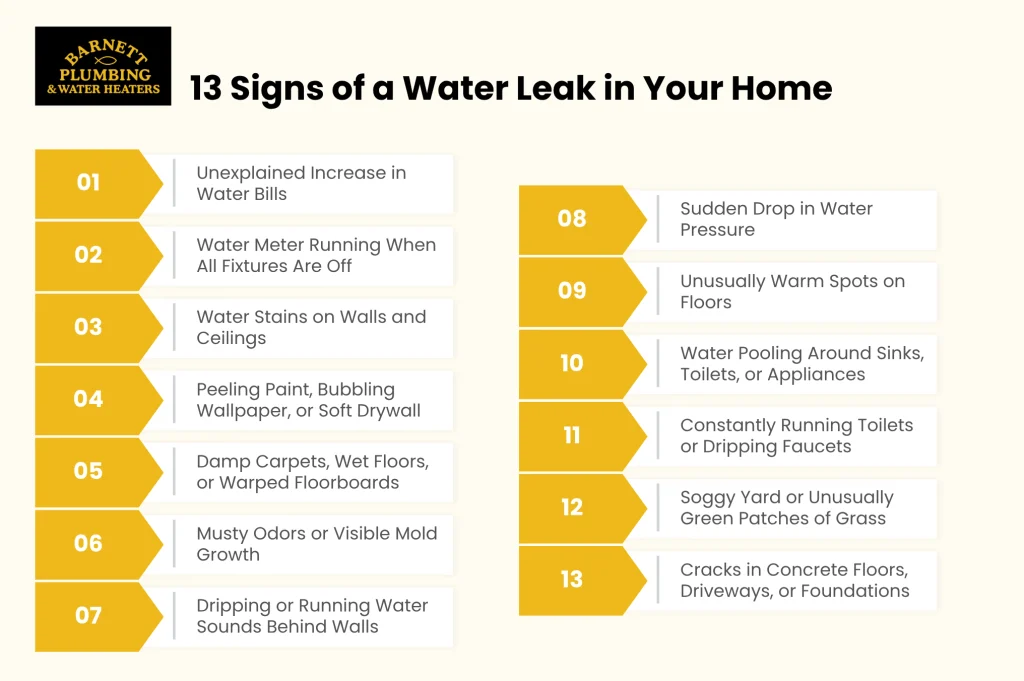
13 Signs of a Water Leak in your home are :
- Unexplained Increase in Water Bills
- Water Meter Running When All Fixtures Are Off
- Water Stains on Walls and Ceilings
- Peeling Paint, Bubbling Wallpaper, or Soft Drywall
- Damp Carpets, Wet Floors, or Warped Floorboards
- Musty Odors or Visible Mold Growth
- Dripping or Running Water Sounds Behind Walls
- Sudden Drop in Water Pressure
- Unusually Warm Spots on Floors
- Water Pooling Around Sinks, Toilets, or Appliances
- Constantly Running Toilets or Dripping Faucets
- Soggy Yard or Unusually Green Patches of Grass
- Cracks in Concrete Floors, Driveways, or Foundations
- Unexplained Increase in Water Bills
An unexpected increase in your monthly water bill indicates a hidden plumbing leak, especially if household water consumption has stayed consistent. Compare your current bill with previous billing periods, checking the gallons used rather than the total amount charged. Account for seasonal irrigation, additional occupants, longer showers, and changes in utility rates before assuming a leak.
If water consumption has increased without an identifiable reason, inspect toilets, faucets, outdoor hose bibs, irrigation lines, and water-using appliances. The U.S. Environmental Protection Agency (EPA) identifies winter usage exceeding 12,000 gallons monthly for a family of four as a possible warning sign requiring further investigation.
- Water Meter Running When All Fixtures Are Off
When water leaks from a pipe, toilet, or underground service line, a continuously running water meter can clearly indicate hidden water leakage, even when all fixtures are turned off. To check for a possible leak, turn off all faucets, showers, washing machines, dishwashers, irrigation systems, and other water-consuming appliances. Record the water meter reading and check whether the low-flow indicator continues moving.
Avoid using water for 2 hours, then compare the meter readings. If the reading increases, water has passed through the meter, indicating a possible leak. If the reading remains unchanged but you still suspect a leak, repeat the test to identify intermittent water loss. Contact a plumber if the meter continues registering water consumption without an identifiable source
- Water Stains on Walls and Ceilings
Yellow, brown, or copper-colored stains on walls and ceilings indicate water leaking from concealed plumbing, roofing materials, or upstairs bathrooms. These marks often appear as irregular patches, circular discoloration, or streaks extending along drywall seams. Pay particular attention to stains beneath bathrooms, around ceiling fixtures, and near plumbing walls.
Examine the affected surface for dampness, soft spots, peeling paint, and discoloration that is spreading. Photograph or lightly mark the stain’s boundaries to monitor changes over several days. Investigate whether staining worsens after rainfall, shower use, or plumbing activity. Recurring or spreading stains suggest an unresolved moisture source requiring further inspection.
- Peeling Paint, Bubbling Wallpaper, or Soft Drywall
Peeling paint, bubbling wallpaper, and soft drywall are common signs of moisture buildup behind walls caused by hidden plumbing leaks. When water seeps into wall materials, it weakens adhesive bonds, damages gypsum board, and causes paint to blister, crack, or peel away from the surface. Other signs of water damage include swollen baseboards, loose wallpaper, and drywall that feels soft or spongy to the touch.
Check walls near bathrooms, kitchens, laundry rooms, and plumbing supply lines for these signs of moisture damage. High indoor humidity, poor ventilation, and condensation on cold-water pipes can also cause similar problems without an active plumbing leak. Check humidity levels, ventilation, and visible condensation on pipes to identify the moisture source.
- Damp Carpets, Wet Floors, or Warped Floorboards
If your carpets feel unexpectedly damp, flooring stays wet, or wooden floorboards start warping without an obvious cause, it signals a water leak beneath the floor. Leaking water supply pipes, loose appliance connections, or damaged plumbing lines can let moisture build up beneath carpets, laminate, hardwood, and vinyl flooring. Trapped moisture causes discoloration, swelling, cupping, buckling, and musty odors.
Walk across the affected area to check for soft spots, unusual floor movement, or moisture seeping through flooring seams. Inspect nearby dishwashers, refrigerators, washing machines, sinks, and water heaters for visible leaks. If the moisture persists without an identifiable source, contact a plumber for a leak inspection and moisture assessment before repairing or replacing the damaged flooring.
- Musty Odors or Visible Mold Growth
When you notice persistent musty odors or visible mold growth in your home, it is a warning sign of moisture buildup caused by hidden water leaks, roof damage, condensation, or poor ventilation. Mold commonly grows around bathroom fixtures, beneath sinks, behind cabinets, under carpets, and inside damp wall cavities. It often appears as black, green, gray, white, or brown patches, accompanied by water stains or deteriorating surfaces.
Check areas with the strongest musty odors, particularly basements, crawl spaces, bathrooms, and laundry rooms. Inspect windows for condensation, check indoor humidity levels, and examine HVAC condensate drains for blockages to identify other moisture sources.
- Dripping or Running Water Sounds Behind Walls
Unusual dripping, trickling, hissing, or running-water sounds behind walls may indicate water escaping from concealed supply lines, pipe joints, or drain connections. Listen when faucets, toilets, showers, and water-using appliances are turned off, preferably during quiet periods at night. Continuous hissing suggests pressurized water movement, while intermittent dripping may indicate a small leak or drainage issue.
However, pipe expansion, water heater operation, and normal drain activity also produce plumbing noises. Check the water meter for unexpected consumption and look for dampness or discoloration on nearby walls. If unexplained sounds persist, professional acoustic leak detection can locate concealed plumbing problems.
- Sudden Drop in Water Pressure
If you notice a sudden drop in water pressure at your faucets, showers, or other plumbing fixtures, it may signal a leaking water supply pipe that reduces flow throughout your home. Check whether the pressure drop affects a single faucet, several fixtures, or the entire house. Low water pressure at one fixture often results from a clogged aerator, blocked showerhead, faulty cartridge, or partially closed supply valve.
If the entire house experiences low water pressure, possible causes include leaking underground water lines, faulty pressure-reducing valves, corroded pipes, or problems with the municipal water supply. Compare the water pressure from hot and cold taps and ask nearby neighbors whether they are experiencing similar issues.
- Unusually Warm Spots on Floors
Unexpected warm spots on tile, concrete, or hardwood flooring indicate a leaking hot-water supply line beneath a concrete slab. Escaping heated water transfers warmth through the surrounding material, creating localized temperature differences across the floor. Walk across the affected area to identify unusually warm sections and compare their temperatures with nearby surfaces.
However, radiant floor heating, direct sunlight, and nearby heating equipment can also warm the floor. Check for accompanying symptoms, including higher water bills, dampness, running-water sounds, or frequent water heater operation. Persistent unexplained warmth warrants professional slab leak detection using thermal imaging and acoustic inspection equipment.
- Water Pooling Around Sinks, Toilets, or Appliances
Water pooling around sinks, toilets, dishwashers, washing machines, or water heaters often indicates leaking plumbing connections, worn seals, damaged supply hoses, or drain problems. Common sources include loose compression fittings, deteriorated faucet gaskets, leaking P-traps, failed toilet wax rings, and cracked appliance hoses.
Dry the affected area, then inspect accessible connections with a flashlight and paper towel to find recurring moisture. Check whether pooling occurs continuously or only during flushing, draining, or appliance operation. Condensation and accidental spills can also cause leaks. If you see active leakage, turn off the affected fixture’s water supply and avoid using electrical appliances near standing water.
- Constantly Running Toilets or Dripping Faucets
Toilet problems such as constantly running water, leaking flush valves, and dripping faucets indicate ongoing water loss caused by worn or faulty plumbing components. Common causes of running toilets include deteriorated flapper valves, improperly adjusted floats, malfunctioning fill valves, and water continuously flowing into the overflow tube.
Dripping faucets often result from worn washers, damaged cartridges, loose O-rings, or faulty valve seats. To check for a toilet leak, add a few drops of food coloring to the toilet tank and wait 10 minutes without flushing. If colored water appears in the toilet bowl, it indicates water leaking through the flush valve seal. Check faucets for continuous dripping, water pooling around their bases, and moisture near plumbing connections.
- Soggy Yard or Unusually Green Patches of Grass
Persistent soggy areas or unusually green patches of grass may indicate leaks in underground water service lines, sprinkler pipes, or irrigation connections. Escaping water saturates surrounding soil, creating soft ground, standing water, or vegetation that grows faster than nearby grass. Inspect these areas during dry weather, particularly along underground plumbing routes, near outdoor faucets, and around sprinkler heads.
Compare the affected ground with surrounding areas, and check whether moisture remains after irrigation stops. Heavy rainfall, poor drainage, overwatering, and natural groundwater also produce wet patches. Unexplained saturation, along with high water bills or reduced pressure, warrants underground leak detection.
- Cracks in Concrete Floors, Driveways, or Foundations
If you notice new or widening cracks in concrete floors, driveways, or your home’s foundation, it may signal an underground water leak affecting the soil beneath the structure. Water escaping from damaged underground pipes can erode supporting soil, change soil moisture levels, and contribute to foundation settlement or movement.
Common warning signs include diagonal foundation cracks, uneven concrete surfaces, sinking driveways, and widening gaps near underground plumbing lines. Concrete cracks can also develop due to normal settlement, soil expansion, tree roots, temperature changes, or concrete shrinkage, so cracks alone do not confirm a water leak. Check for other signs of underground leakage, such as consistently wet soil, unexplained increases in water bills, or shifting floors.
How Can You Detect a Hidden Water Leak in Your Home?
To detect a hidden water leak in your home, check your water meter with all fixtures off, inspect plumbing connections, run a toilet dye test, and check walls, floors, and ceilings for moisture. If you cannot identify the source, isolate the indoor plumbing from the main water supply and arrange professional leak detection to locate concealed pipe damage.
Follow these 8 steps to detect a hidden water leak in your home:
- Shut off faucets, showers, dishwashers, washing machines, irrigation systems, and other water-consuming equipment. Confirm that no household water is being used during testing.
- Record the water meter reading and check its leak indicator. Wait two hours without using water, then compare the readings. Any increase indicates that water passed through the meter during the test, suggesting a possible leak.
- Add several drops of food coloring to each toilet tank. Wait 10 minutes without flushing. If colored water appears in the bowl, inspect the flapper or flush valve seal for deterioration.
- Examine pipes beneath sinks, water heater connections, appliance supply hoses, shutoff valves, and drain fittings. Look for dripping water, corrosion, mineral deposits, and damp surfaces.
- Check for water stains, bubbling paint, soft drywall, warped floorboards, musty odors, and localized warm spots. Use a moisture meter to assess suspicious surfaces without unnecessary wall openings.
- Inspect hose bibs, sprinkler heads, irrigation valves, and underground supply routes. Look for persistent puddles, soggy soil, or unusually green grass during dry weather.
- Close the home’s main shutoff valve and recheck the water meter. If the meter still shows water flow, suspect a leak between the meter and the shutoff valve, assuming no other connections are active. If movement stops, investigate plumbing supplied downstream of the valve.
- If the leak remains concealed, contact a licensed plumber for acoustic leak detection, thermal imaging, or pressure testing. These methods help locate leaks behind walls, beneath concrete slabs, and inside underground supply lines.
What Causes Water Leaks in a House?
Aging plumbing pipes, corrosion, excessive water pressure, freezing temperatures, deteriorated seals, and faulty plumbing installations or appliances can cause water leaks in a house. These conditions weaken pipes, damage fittings, or disrupt watertight connections, allowing water to escape from supply lines, fixtures, and drainage systems.
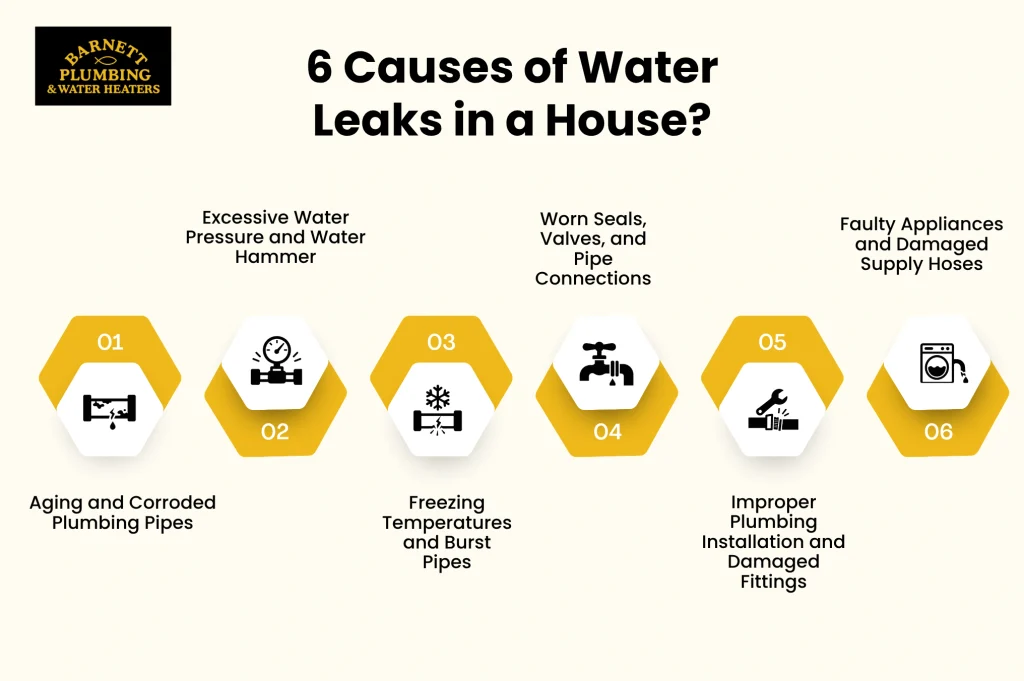
The following 6 factors explain the main causes of water leaks in a house:
- Aging and Corroded Plumbing Pipes
When plumbing pipes deteriorate with age, corrosion and material degradation weaken their walls, eventually creating cracks or pinhole leaks. Galvanized steel pipes develop internal rust, while copper pipes experience localized pitting corrosion. These failures commonly affect older water supply lines, concealed wall plumbing, and underground service pipes. Warning signs include recurring leaks, rust deposits, and discolored water.
- Excessive Water Pressure and Water Hammer
Excessive household water pressure puts continuous stress on plumbing joints, valves, seals, and supply hoses, increasing the likelihood of leaks. Water hammer creates additional pressure surges when flowing water stops abruptly. These conditions accelerate deterioration around washing machine connections, water heater fittings, and supply lines. Banging pipes, leaking fittings, and premature valve failures are common warning signs.
- Freezing Temperatures and Burst Pipes
During freezing weather, water trapped inside plumbing pipes expands as it turns to ice, increasing internal pressure and potentially rupturing pipe walls. Exposed pipes in unheated attics, crawl spaces, garages, and exterior walls face greater risk. Leakage often becomes noticeable after the frozen section thaws and water flow resumes. Reduced flow, visible frost, and cracked pipes indicate potential damage.
- Worn Seals, Valves, and Pipe Connections
As plumbing seals and connections deteriorate, washers, O-rings, gaskets, and valve cartridges lose their ability to prevent leaks. Repeated fixture use, mineral buildup, and temperature fluctuations accelerate this deterioration. Faucets, toilets, shower valves, and under-sink fittings are common failure points. Worn toilet flappers allow continuous water loss into the bowl, while damaged faucet washers cause dripping.
- Improper Plumbing Installation and Damaged Fittings
When plumbers install pipes or fittings incorrectly, misaligned joints, incompatible materials, and improper tightening create openings that let water escape. Inadequate pipe support also increases mechanical stress during pressure and temperature changes. These problems commonly develop after bathroom renovations, kitchen remodeling, or water heater replacements. Moisture around newly installed connections and recurring joint leaks indicate possible installation defects.
- Faulty Appliances and Damaged Supply Hoses
If appliance supply hoses crack, inlet valves malfunction, or internal seals deteriorate, water escapes through damaged connections or equipment components. Washing machines, dishwashers, refrigerators with ice makers, and water heaters are common sources. Repeated vibrations, heating cycles, and aging accelerate component wear. Warning signs include pooling beneath appliances, leaking hose connections, and moisture appearing during washing or draining cycles.
What Should You Do When You Notice Signs of a Water Leak?
When you notice signs of a water leak, check for immediate safety hazards, shut off the affected water supply, identify the suspected leak source, contain the water, protect your belongings, document visible damage, contact a professional plumber when necessary, and dry and restore affected areas. Taking these steps promptly helps prevent further water damage, reduces repair costs, and protects your home from structural deterioration and mold growth.
- Identify Immediate Safety Hazards
Before inspecting a water leak, check for standing water near electrical outlets, exposed wiring, submerged appliances, and damaged ceilings. Avoid touching wet electrical equipment or entering potentially energized water. Turn off electricity only when the breaker panel is accessible from a dry location. Leave the area if you discover sewage contamination, structural instability, or electrical hazards.
- Shut Off the Affected Water Supply
If water is actively leaking, locate the nearest fixture shutoff valve beneath the sink, behind the toilet, or near the affected appliance. Turn a round valve clockwise or a lever valve a quarter turn perpendicular to the pipe. For concealed or uncontrolled supply-line leaks, close the main water shutoff valve. Avoid forcing damaged valves or entering hazardous areas.
- Identify the Suspected Leak Source
Inspect accessible plumbing connections, faucets, toilets, appliance hoses, and drainpipes for dripping or moisture. Check whether water appears continuously or only when fixtures or appliances operate. Continuous leakage suggests a pressurized supply-line problem, while water appearing during drainage suggests a drainpipe issue. Examine nearby walls and floors for moisture if the source remains concealed.
- Contain Water and Protect Belongings
After controlling the water supply, place buckets beneath dripping connections and use towels to absorb small amounts of water. Move furniture, electronics, rugs, documents, and other belongings away from affected areas. Use suitable water extraction equipment for clean standing water only when electrical conditions permit. Avoid handling sewage-contaminated water without appropriate professional assistance.
- Document the Leak and Visible Damage
Take photographs and videos of leaking pipes, water stains, damaged flooring, and affected belongings before major cleanup or repairs, without delaying urgent action. Record when you discovered the leak, relevant water meter readings, and the extent of visible damage. Keep plumbing invoices, repair estimates, and cleanup receipts. These records support repair assessments and potential homeowners insurance claims.
- Contact a Professional Plumber When Necessary
Consult a licensed plumber if the leak involves concealed pipes, underground water lines, burst plumbing, or damaged connections requiring specialized repairs. Seek urgent help if you cannot stop the water flow, pressure drops significantly, or leakage causes extensive property damage. Explain the symptoms and affected location. Professional plumbers use pressure testing, acoustic equipment, and other diagnostic methods to investigate hidden leaks.
- Dry and Restore Affected Areas
After repairing the leak, remove standing water and dry affected walls, floors, carpets, and belongings using appropriate extraction equipment, ventilation, and dehumidifiers. Inspect drywall, insulation, carpet padding, and subflooring for trapped moisture. The U.S. Environmental Protection Agency (EPA) reports that drying water-damaged materials within 24–48 hours helps prevent mold growth. Replace materials that cannot be adequately cleaned and dried.
What Damage Can an Undetected Water Leak Cause?
An undetected water leak can cause structural deterioration, mold growth, damaged walls and flooring, increased water bills, electrical hazards, and expensive property repairs. Persistent leakage allows moisture to penetrate drywall, wood, insulation, and concrete, gradually weakening building materials and affecting indoor conditions. The longer a leak goes unresolved, the greater the risk of widespread damage and costly restoration.
The following 6 types of damage can result from an undetected water leak:
- Structural Damage: Continuous water leakage can weaken wooden framing, subfloors, and supporting structures over time. Wood rot, swelling, and deterioration can develop, while underground leaks can cause soil erosion, foundation settlement, and costly structural repairs.
- Mold and Mildew Growth: Persistent moisture trapped behind walls, beneath flooring, or inside insulation creates conditions for mold and mildew growth. Mold can damage porous materials, produce musty odors, and affect indoor air quality. Addressing water leaks and drying affected materials within 24 to 48 hours helps reduce the risk of mold growth and further moisture damage.
- Damaged Walls, Ceilings, and Flooring: Water penetrating drywall, ceiling materials, and flooring causes discoloration, peeling paint, softened surfaces, and material deterioration. Hardwood flooring can warp or buckle, while saturated carpets and insulation can develop persistent odors and require removal or replacement.
- Increased Water Bills: Continuous water loss through leaking pipes, toilets, or faucets increases household water consumption and monthly utility expenses. Even small leaks can waste significant amounts of water over time, resulting in higher bills and unnecessary expenses until the damaged plumbing components are repaired.
- Electrical Hazards: Water reaching electrical outlets, switches, wiring, or household appliances can cause corrosion, short circuits, equipment failure, and electric shock hazards. Moisture entering concealed electrical systems can damage electrical components and require inspection and repairs by a qualified electrician.
- Higher Repair and Restoration Costs: Delayed leak repairs allow moisture to spread into surrounding drywall, flooring, insulation, and structural components. A minor plumbing problem can develop into extensive water damage requiring pipe replacement, moisture removal, mold remediation, and reconstruction, significantly increasing overall repair expenses.
How Can You Prevent Water Leaks in Your Home?
To prevent water leaks in your home, regularly inspect pipes, faucets, and plumbing fixtures, monitor water bills and meter readings, maintain appropriate water pressure, replace worn plumbing components, protect exposed pipes from freezing, maintain appliances and water heaters, and install water leak detection devices. These preventive measures help identify plumbing problems early, reduce water waste, prevent property damage, and minimize expensive plumbing repairs.
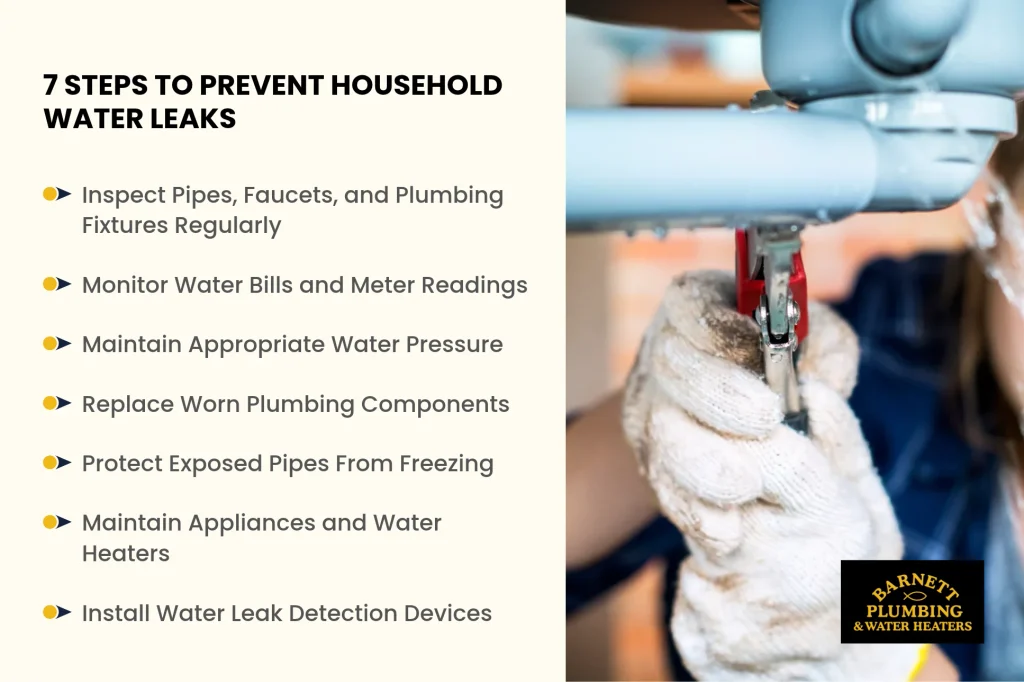
Follow these 7 steps to prevent household water leaks:
- Inspect Pipes, Faucets, and Plumbing Fixtures Regularly
Check exposed supply pipes, under-sink connections, faucets, toilets, shower valves, and outdoor hose bibs for dripping, corrosion, mineral deposits, and loose fittings. Examine cabinet interiors and surrounding surfaces for moisture or discoloration. Inspect older plumbing systems more often, and repair deteriorated pipes, damaged joints, or persistent leaks as soon as you find them.
- Monitor Water Bills and Meter Readings
Review monthly water bills and compare gallon consumption with previous billing periods. Account for seasonal irrigation, household occupancy, and changes in water use. Periodically check the water meter during a two-hour period with no water use.
- Maintain Appropriate Water Pressure
Check household water pressure using a pressure gauge attached to an outdoor hose bib. Excessive pressure stresses plumbing joints, valves, and appliance hoses. The EPA recommends incoming water pressure between 45 and 60 psi for efficient fixture operation. Have a plumber inspect or adjust the pressure-reducing valve when readings remain unusually high.
- Replace Worn Plumbing Components
Inspect faucet washers, O-rings, toilet flappers, supply hoses, shutoff valves, and compression fittings for cracks, corrosion, looseness, or deterioration. Replace damaged components promptly rather than waiting for continuous leakage. Follow manufacturer recommendations for flexible hose replacement and use compatible fittings. Arrange professional help for corroded pipes, inaccessible connections, or components that require specialized installation.
- Protect Exposed Pipes From Freezing
Insulate vulnerable plumbing in attics, crawl spaces, garages, basements, and exterior walls before freezing weather arrives. Seal openings that let cold air reach pipes, and disconnect outdoor hoses. Drain irrigation lines according to manufacturer instructions. During severe cold, keep indoor heat on and open cabinet doors to circulate warm air around plumbing near exterior walls.
- Maintain Appliances and Water Heaters
Regularly inspect washing machine hoses, dishwasher connections, refrigerator water lines, and water heater fittings for moisture, corrosion, or damaged seals. Regularly inspect appliances and water heater components for leaks, follow manufacturer maintenance schedules, and replace worn hoses or faulty parts to prevent water damage.
- Install Water Leak Detection Devices
Place water leak sensors beneath sinks, behind appliances, near water heaters, and in other leak-prone areas. Consider whole-house flow monitors that identify unusual water consumption or pressure changes. Automatic shutoff systems can stop the water supply after detecting certain leaks.
When Should You Call a Professional Plumber for a Water Leak?
Call a professional plumber when you can not control a water leak, water consumption remains unusually high, you suspect a leak in concealed pipes, or plumbing damage creates safety hazards. Burst pipes, underground leaks, recurring plumbing failures, and wastewater backups also require professional assessment. Contact a local plumber offering professional water leak detection services to locate hidden leaks and prevent further property damage.
The following 6 situations require professional plumbing assistance:
1. Burst Pipes or Uncontrolled Water Leakage
2. Persistent Water Loss or Unexplained High Water Bills
3. Suspected Hidden Leaks Behind Walls or Beneath Floors
4. Underground Water Line or Slab Leaks
5. Recurring Plumbing Leaks or Significant Water Pressure Loss
6. Water Leaks Involving Electrical Hazards, Sewage Backups, or Structural Damage
How Do Professional Plumbers Detect Hidden Water Leaks?
Professional plumbers detect hidden water leaks using acoustic listening equipment, thermal imaging cameras, pressure testing, moisture meters, and specialized inspection tools. They select methods based on the plumbing system, suspected leak location, pipe materials, and visible symptoms to identify concealed leaks without unnecessary damage to walls or floors.
- Acoustic Leak Detection: Plumbers use electronic listening devices to detect sounds from water escaping pressurized pipes. Sound analysis helps pinpoint hidden leaks behind walls, beneath floors, and along underground water supply lines.
- Thermal Imaging: Infrared cameras reveal temperature differences associated with concealed moisture and leaking hot-water pipes. Plumbers examine thermal patterns to identify suspected leak locations without opening walls or removing flooring.
- Pressure Testing: Plumbers isolate sections of the plumbing system and monitor pressure levels to identify water loss. A measurable pressure drop during testing indicates possible leakage within the inspected pipe section.
- Moisture Meter Testing: Specialized moisture meters measure moisture levels in drywall, ceilings, and flooring materials. Elevated readings help plumbers identify moisture accumulation and narrow down the suspected source of a concealed leak.
- Video Pipe Inspection: Waterproof inspection cameras allow plumbers to examine the interior of drainpipes and sewer lines. Camera footage reveals cracks, separated joints, and deteriorated pipe sections that allow wastewater to escape.
- Tracer Gas Detection: Plumbers introduce detectable tracer gas into suitable isolated plumbing systems to locate concealed leaks. Sensitive detectors identify escaping gas, helping pinpoint damaged pipes beneath concrete slabs, behind walls, or underground.
How Much Does Professional Water Leak Detection and Repair Cost?
Professional water leak detection services cost between $150 and $400 for standard diagnostic inspections, while common pipe leak repairs range from $250 to $850, averaging $500. Complex hidden water leaks can cost $500 to $5,000 or more.
Overall cost depends on several factors, including the leak’s location and severity, pipe accessibility, plumbing materials, detection equipment, labor charges, and the extent of property damage. Leaks behind walls, beneath concrete slabs, or underground often require more extensive work, which increases repair costs. Additional costs can include drywall repairs, flooring replacement, mold remediation, and water-damage restoration.