

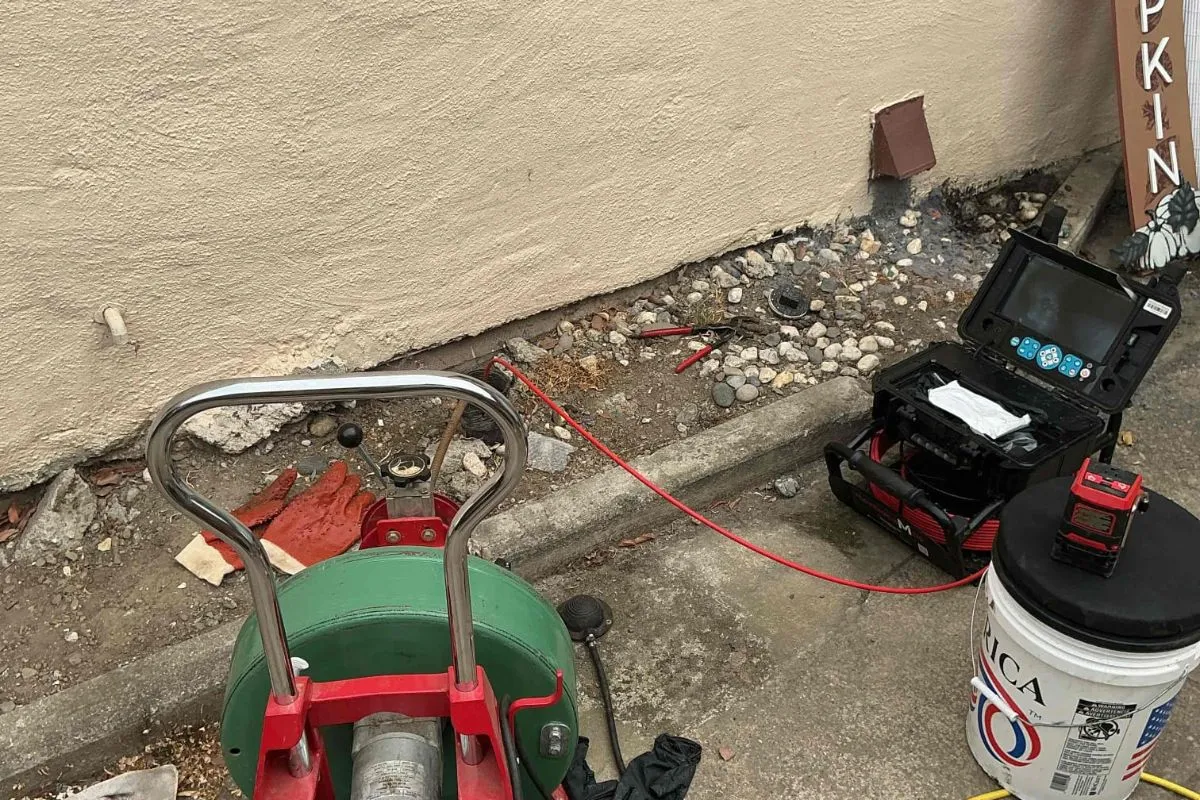
When a drain backs up, there are two main ways to clear it: snaking and hydro jetting. Both work, but they solve different problems. Picking the right one is the difference between a drain that stays clear and one that clogs again next month.
What is drain snaking?
A drain snake, or auger, is a long steel cable with a cutting tip. The plumber feeds it into the drain and spins it until it breaks through the clog.
Snaking is a good fit for:
- A single clog in one sink, tub or toilet.
- Something solid stuck in the line, like a toy, wipes or a wad of hair.
- Getting water flowing again fast in an emergency.
The limit: A snake punches a hole through the clog, but it doesn’t clean the pipe. Grease, scale and roots stay stuck to the walls, and the clog often comes back.
What is hydro jetting?
Hydro jetting sends water through a special hose and nozzle at very high pressure. The nozzle has jets that point forward to break up the blockage and backward to scour the pipe walls and push debris out to the sewer.
Hydro jetting is a good fit for:
- Drains that keep clogging after they’ve been snaked.
- Grease buildup in kitchen lines.
- Tree roots in the sewer line (often with a root-cutting head first).
- Slow drains throughout the house.
- Cleaning a sewer line before a repair or lining job.
The limit: Hydro jetting is powerful. It isn’t the right choice for a pipe that’s already cracked, collapsed or badly corroded. That’s why we look first.
Side by side
| Snaking | Hydro jetting | |
|---|---|---|
| How it works | Spinning cable breaks through the clog | High-pressure water scours the whole pipe |
| Best for | One-time clogs, solid objects | Repeat clogs, grease, roots, main lines |
| Cleans pipe walls | No | Yes |
| How long it lasts | Until buildup catches the next clog | Much longer, since the buildup is gone |
| Safe for damaged pipes | Usually | Not until the pipe is inspected |
Why a camera inspection comes first
Before we jet a main line, we usually run a sewer camera through it. In a few minutes you can see on screen:
- What’s actually causing the clog: grease, roots, scale or a broken pipe.
- Whether the pipe is healthy enough to jet.
- Whether there’s a belly, offset joint or crack that will keep catching debris.
If the pipe is in good shape, jetting can keep it clear for a longer time. If it’s damaged, you’ll know before you spend money cleaning a pipe that needs sewer line repair. Related: Why does my house smell like sewer?
Signs you need more than a snake
- You’ve had the same drain cleared more than once this year.
- More than one drain is slow at the same time.
- Your toilets gurgle when other fixtures drain.
- You have large trees near your sewer line.
- Your home was built before the 1980s and still has its original drain lines.
That last one covers a lot of the Tri-Valley. Many neighborhoods in Livermore, Pleasanton, Dublin and San Ramon have original cast iron or clay sewer lines, and hard water adds scale inside the pipes over time.
How Barnett Plumbing helps
We’ll recommend the method that fits your drain, not the most expensive one. For a single clog, that’s often a snake. For repeat clogs and main lines, we’ll show you the camera footage and explain whether hydro jetting, a repair or both make sense before any work starts. Learn more about our drain cleaning service.
Members save 10% on repairs and get priority scheduling. Ask about our membership when you call.
Drain keeps clogging? Call us at (925) 872-0805 or book online.